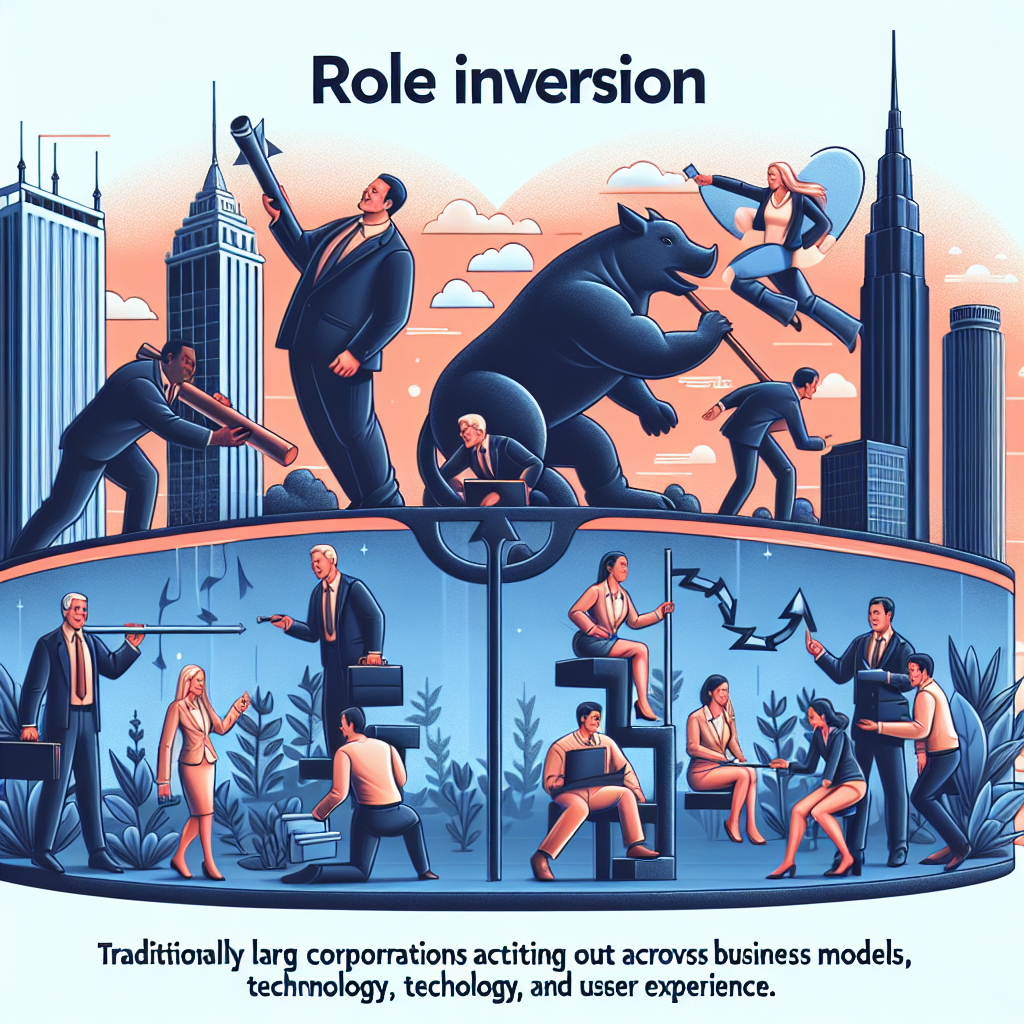
When Corporations Act Like Startups (and Startups Become Incumbents): Role Inversion Across Business Models, Technology, and UX
Traditional vs. startup is no longer a useful binary. This white paper examines how large incumbents increasingly behave like startups—and how scaling startups adopt incumbent traits—across banking, mobility, healthcare, and retail. Using business model, technology, and user experience as comparison axes, it analyzes regulatory and scale triggers, cross‑sector patterns, and strategic implications for leaders navigating a fluid, post‑label competitive landscape.

Abstract
The long‑standing narrative of business competition frames traditional corporations as slow, regulated, asset‑heavy incumbents, and startups as agile, digital‑native disruptors. This dichotomy is increasingly inadequate to explain how markets actually work. Across sectors such as banking, mobility, healthcare, and retail, the roles of “incumbent” and “startup” are inverting. Established firms are adopting agile methods, modern technology stacks, and UX‑centric approaches typically associated with startups. At the same time, successful startups are accumulating regulatory obligations, operational complexity, and organizational structures that make them behave like the incumbents they set out to disrupt.
This white paper analyzes role inversion along three axes: business model, technology, and user experience. Drawing on cross‑industry cases—including banks building greenfield digital units, hospitals deploying telemedicine, and consumer brands replatforming around data—we show how regulatory change, scale, capital intensity, and trust requirements drive convergence between “old” and “new” players [1][2][3]. We argue that the meaningful distinction today is not traditional vs startup, but static vs adaptive playbooks. The winners will be organizations that can deliberately switch between startup and incumbent modes as conditions change, while managing the trade‑offs in risk, speed, and trust.
Background
For at least two decades, popular business discourse has leaned on a familiar plotline: startups as nimble Davids slinging digital slingshots at lumbering, bureaucratic Goliaths. Incumbents were framed as encumbered by legacy IT, physical assets, and regulation, while startups were celebrated for lean teams, cloud‑native tech, and direct‑to‑consumer digital experiences. This frame shaped investment theses, corporate strategy, and talent flows.
Yet, as digital transformation has moved from slogan to necessity, the ground has shifted. Traditional organizations have not simply defended their positions; many have selectively imported startup methodologies such as agile development and lean experimentation. Toyota, renowned for its production efficiency, integrated lean startup methods into product development, accelerating timelines and boosting employee engagement in continuous improvement [2]. ING, a long‑established bank, adopted agile frameworks at scale to speed service delivery and product launches, demonstrating that even regulated incumbents can organize like startups when the stakes demand it [2].
Concurrently, rising startups have discovered the gravitational pull of scale and regulation. Fintechs that began in lightly regulated sandboxes now navigate complex compliance regimes that increasingly resemble those of banks [4]. Digital health platforms must align with clinical governance, reimbursement rules, and data privacy requirements as they grow. Research on innovation and sustainability shows that startups’ absorptive capacity—their ability to recognize and apply new knowledge—depends on flexible structures and openness [3]. As they import incumbent‑style hierarchies and rigid processes, they risk eroding the very capabilities that enabled their early growth.
Regulatory evolution has amplified these shifts. Regulatory sandboxes in finance, reverse‑flipping reforms in India, and new investment rules for large tech investors all blur traditional boundaries between “startup” and “corporate” [4][5][6]. At the same time, changes in antitrust enforcement have measurably affected venture capital flows, showing how policy can accelerate or impede new entrants [7]. The result is a competitive landscape defined less by organizational age or sector and more by how effectively firms adapt their business models, technology architectures, and user experience strategies as roles invert.
This paper proposes a more precise lens for understanding these changes. By analyzing role inversion along business model, technology, and UX dimensions, we can move beyond simplistic labels and understand when incumbents successfully “act like startups” and when startups “age into” incumbent behavior. The aim is not to romanticize either side, but to help strategists choose the right playbook for their company’s maturity, regulatory exposure, and trust requirements.
Methods
This analysis synthesizes qualitative and quantitative insights from cross‑industry case material and recent research. The core research context includes documented examples of incumbents adopting startup methodologies and technology practices, as well as empirical studies on innovation, regulation, and venture capital dynamics.
First, we drew on case studies of large organizations implementing agile and lean startup methods, such as Toyota’s integration of lean startup into product development and ING’s bank‑wide agile transformation [2]. These provide concrete evidence that traditional corporations can reconfigure processes and structures to emulate startup behaviors while operating at scale.
Second, we incorporated research on how startups’ innovation activities affect sustainability performance and how absorptive capacity mediates this relationship [3]. This work illuminates the risks when scaling startups adopt rigid, incumbent‑like structures that limit their ability to absorb external knowledge. We coupled this with analyses of regulatory sandboxes in fintech, the evolution of startup regulations, and reverse‑flipping reforms that affect where and how companies choose to incorporate and operate [4][5].
Third, we used evidence on the impact of regulatory enforcement on venture capital flows to understand how policy can shape the balance between incumbents and startups at the ecosystem level [7]. While this paper does not conduct new primary research, it triangulates across these sources to identify recurring patterns of role inversion in banking, mobility, healthcare, and retail. All specific quantitative statistics and dated regulatory events are drawn directly from the referenced materials.
Finally, we structured the synthesis around three comparison axes—business model, technology, and user experience—ensuring that sector‑specific observations could be mapped to a common analytical frame. This approach allows us to compare not only individual companies but also the structural drivers that push organizations toward either startup‑like or incumbent‑like behavior over time.
Defining the Three Comparison Axes
Role inversion is easiest to see when we move from labels to concrete dimensions of how organizations operate. Three axes—business model, technology, and user experience—provide a consistent way to compare both incumbents and startups.
On the business model axis, we look at revenue structures (subscriptions, usage‑based pricing, marketplaces, platforms, licensing), asset intensity, vertical integration, regulatory dependence, and data monetization. Traditional banks, for instance, historically relied on interest spreads and branch networks, whereas early neobanks emphasized interchange fees and lightweight balance sheets. Yet as both sides respond to competitive and regulatory pressures, we see incumbents experimenting with subscription‑like premium accounts and API monetization, while startups accumulate assets, staff, and complex fee structures that echo those of incumbents.
The technology axis captures stack modernity (cloud‑native vs on‑premises), AI/ML utilization, modular versus monolithic architectures, integration ecosystems, and build‑versus‑buy decisions. Startups typically begin with cloud‑native, highly modular systems and aggressive use of third‑party services. Incumbents often start from mainframes and custom monoliths but have been progressively adopting APIs, microservices, and AI capabilities to modernize. Over time, however, successful startups build their own platforms, data centers, or proprietary infrastructure that hardens into a new form of legacy.
The user experience (UX) axis focuses on onboarding friction, personalization, self‑service versus assisted flows, omnichannel consistency, speed and transparency, and trust signaling. Startups often differentiate through ultra‑low‑friction onboarding, clean mobile interfaces, and transparent pricing. Incumbents, facing heavier regulation and legacy processes, have historically offered slower, more fragmented, and document‑heavy experiences. As role inversion occurs, incumbents invest in UX design, mobile apps, and omnichannel orchestration, while scaling startups layer on consent screens, fraud checks, customer support tiers, and policy‑driven friction.
Throughout the sector analyses that follow, we use these three axes as a through‑line to understand not only what changes, but why—and with what consequences for competition and strategy.
Key Findings
Banking & Fintech: When Neobanks Become the New Bureaucracy
In banking, the initial contrast between incumbents and fintechs was stark. Traditional retail banks operated on legacy core systems, delivered through physical branches, and were tightly bound to capital and prudential regulations. Neobanks emerged as mobile‑first challengers, built on modern core banking systems and API‑driven architectures. Their business models emphasized interchange revenue, lightweight balance sheets, and user‑centric interfaces.
Over the last decade, however, large banks have mounted a sophisticated response. Many created internal “greenfield” digital banks or venture studios to experiment with new products outside their slowest legacy processes. ING’s adoption of agile frameworks across its organization demonstrates that a regulated incumbent can reconfigure itself to deliver new products and services rapidly [2]. Traditional banks have also launched open API platforms to allow third‑party developers to build on their data and services, moving toward platform and marketplace models that were once distinctively “startup.”
At the same time, fintechs have been pulled toward incumbent realities. Regulatory sandboxes allowed early fintechs to test offerings under relaxed rules, but mature players must now comply with comprehensive banking, anti‑money‑laundering (AML), and consumer protection regimes [4]. As they scale, they introduce more fees to cover compliance and risk costs, build out large risk and legal teams, and slow their release cycles to accommodate audits and regulatory reviews. Customer interfaces that once featured a few delightful screens expand into complex, edge‑case‑driven flows requiring additional verifications and disclosures.
The result is a clear role inversion along all three axes. On the business model side, incumbents experiment with subscription‑like tiers, usage‑based API fees, and embedded finance partnerships, while fintechs diversify into credit, savings, and lending—products that bind them to the same economic and regulatory logics as banks. On the technology axis, incumbents deploy modern digital channels and data platforms even as some neobanks discover that their early technology choices must be rewritten to handle scale and regulatory reporting. On the UX axis, traditional banks’ digital channels now often rival or exceed fintechs in polish, while leading fintechs face increasing UX friction as they adapt to compliance and risk demands.
This inversion also reshapes user trust and switching costs. Initially, customers viewed fintechs as more innovative but less trustworthy than established banks. As fintechs acquire banking licenses, integrate deposit insurance, and impose stricter security, their perceived trustworthiness rises—often at the expense of the effortless UX that defined their early differentiation. Conversely, incumbents that launch sleek digital brands under existing banking licenses can combine startup‑like UX with institutional trust, complicating the original David vs Goliath narrative.
Mobility & Logistics: Platforms vs Physical Networks
In mobility and logistics, startups first gained an advantage by abstracting away physical assets. Ride‑hailing platforms and last‑mile delivery startups presented themselves as pure technology companies that coordinated, but did not own, cars, drivers, or warehouses. Their business models centered on marketplace fees and dynamic pricing, while incumbents such as taxi companies and logistics firms relied on asset‑heavy fleets, depots, and long‑term contracts.
Faced with these challengers, traditional players began adopting startup tactics. Taxi operators launched their own booking apps, bringing real‑time tracking and digital payments to an industry long associated with phone dispatch and cash. Logistics firms implemented AI‑based routing to improve delivery efficiency and experimented with flexible, usage‑based shipping options. These shifts represent a move from fixed, contract‑driven models toward data‑driven, on‑demand services. On the technology axis, established firms invested in cloud‑based optimization engines and API integrations to plug into e‑commerce platforms, mirroring the integration ecosystems of their startup competitors.
However, as ride‑hailing and delivery startups scaled, they increasingly resembled the incumbents they disrupted. To ensure reliability and control, they began to tightly manage or even own parts of their physical networks—booking warehouse space, establishing delivery hubs, and in some cases financing or leasing vehicles. Their business models evolved from pure marketplaces toward hybrid arrangements involving guaranteed earnings, minimum pricing, and long‑term partnerships with drivers or couriers. On the regulatory front, they faced intense scrutiny and legal battles over labor classification, safety, and competition, pushing them into direct negotiation with regulators much like traditional operators.
User experience reflects this convergence. Early on, ride‑hailing apps were laboratories of experimentation, with frequent feature tests and aggressive price promotions. Today, as these platforms confront regulatory constraints and unit‑economics pressures, pricing has become more standardized, surge algorithms more conservative, and promotional experimentation more limited. Policy‑driven friction—such as mandatory safety confirmations or data‑sharing consent—has grown. Meanwhile, incumbents’ apps have narrowed the UX gap, offering real‑time tracking, ratings, and digital receipts that were once differentiating features of startups.
The broader pattern is that technology which was once disruptive becomes infrastructural. AI‑based routing, driver ratings, and dynamic pricing, once edge innovations, are now baseline expectations in many markets. At scale, these systems are optimized for stability and compliance rather than radical experimentation, leading platforms to adopt a more conservative posture reminiscent of incumbents.
Healthcare: From Clinics to Digital Health Startups and Back Again
Healthcare presents a particularly vivid case of role inversion because of the sector’s high trust and regulatory demands. Traditionally, hospitals and clinic networks operated through in‑person visits, complex appointment systems, and paper‑heavy administration. Digital health startups entered with telemedicine platforms, wellness apps, and remote monitoring tools that promised convenience and proactive care.
In recent years, traditional providers have moved rapidly to adopt startup‑like tools and methods. Telemedicine platforms are now widely used in hospitals and clinics, enabling remote consultations that reduce travel and waiting times. Patient portals and mobile apps provide access to test results, appointment booking, and messaging. AI‑supported triage and remote monitoring solutions help clinicians prioritize care and manage chronic conditions [1]. Many providers are experimenting with new business models such as subscription‑based wellness programs and value‑based care contracts that tie payment to outcomes rather than activity, supported by digital data collection.
These shifts require incumbents to adopt agile, cross‑functional teams that can integrate digital tools into clinical workflows. Hospitals increasingly partner with technology vendors or build in‑house digital units, borrowing from startup playbooks to design and iterate on patient journeys. In some cases, they leverage data platforms and analytics capabilities akin to those used by consumer technology firms, blurring the line between “healthcare provider” and “digital platform.”
Conversely, as digital health startups mature, they encounter the full force of healthcare’s regulatory and ethical constraints. Clinical governance requires robust processes for safety, efficacy, and quality improvement. Insurance reimbursement introduces complex coding, documentation, and audit requirements. Data privacy regulations demand stringent consent flows and security measures. Startups must also integrate with legacy electronic medical record (EMR) systems, which can be technically and operationally challenging.
This produces a swift UX transformation: simple, consumer‑style flows accumulate warning messages, consent checkboxes, and redundancy to satisfy compliance. Release cycles lengthen as every new feature must undergo clinical and regulatory review. Organizationally, startups build out compliance, quality, and medical affairs teams, adopting layered decision‑making processes more typical of incumbents. Because the stakes involve patient safety, this “aging into” incumbent behavior occurs faster and more decisively than in many other sectors.
Retail & E‑commerce: Marketplaces, DTC, and the Replatforming Loop
Retail has long been a stage for visible confrontation between brick‑and‑mortar incumbents and digital upstarts. Early on, traditional retailers relied on physical stores, wholesale relationships, and rudimentary e‑commerce sites, while direct‑to‑consumer (DTC) brands and marketplaces offered tailored online experiences, subscription models, and deep user analytics.
In response, incumbents began acting like startups. They launched DTC brands and private labels with distinct digital identities, integrated marketplaces into their platforms to expand assortment without owning inventory, and deployed subscription models for staples and curated boxes. On the technology axis, many adopted headless commerce architectures, decoupling front‑end experiences from back‑end systems to iterate faster. Recommendation engines and customer data platforms allowed them to personalize offers and measure behavior at a granular level [1]. The business model shifted from pure retail margin to a mix of margins, subscription revenues, marketplace commissions, and data‑enabled services.
DTC and marketplace startups, meanwhile, discovered the gravitational pull of physical retail and operational constraints. As they scaled, leading brands opened their own stores or pop‑ups, recognizing that omnichannel presence improves acquisition, trust, and unit economics. They invested in owned logistics capabilities—warehouses, last‑mile operations, or tightly integrated third‑party logistics—to stabilize service levels. Business objectives shifted from growth at all costs to margin optimization, leading to growth‑braking policies such as stricter return windows, minimum order thresholds, and more conservative discounting.
UX also evolved. Early DTC experiences emphasized playful branding, surprise‑and‑delight packaging, and liberal return policies designed to reduce friction and build trust. Over time, as order volumes grew and fraud risks surfaced, flows incorporated more verification, clearer but stricter policies, and standardized patterns. Experimentation gave way to risk‑averse design optimized for operational scalability rather than maximal delight. This replatforming loop—incumbents moving to modern stacks while startups discover the need for robust, sometimes rigid, operational systems—is especially visible to consumers toggling between online and offline channels.
Comparative Analysis
Role inversion does not occur uniformly. Its timing and form vary by sector, regulation, and capital intensity. Still, several cross‑cutting patterns emerge when we compare industries along the three axes.
Business Model Convergence and Trade‑offs
Across sectors, incumbents are most likely to adopt startup‑like business models when facing credible digital competition and when regulations open space for experimentation. In banking, regulatory sandboxes and open banking reforms allowed both new entrants and incumbents to test API‑based services and partnership models [4]. In retail, the rise of marketplaces and DTC brands forced traditional chains to incorporate marketplace commissions and subscriptions into their revenue mix.
For startups, the inflection point toward incumbent‑like business models typically arrives when scale exposes the full costs of risk, compliance, and operations. Research on innovation and sustainability performance highlights that as organizations formalize processes, their absorptive capacity can decline if structures become too rigid [3]. Startups must then choose between maintaining lean, flexible models and adding revenue streams that demand heavier regulation and operational controls. In fintech and healthcare, the decision to pursue lending or clinical services quickly locks companies into complex regulatory regimes, narrowing future business model options.
These dynamics can be summarized along key business model dimensions:
| Dimension | Incumbent → Startup‑like shift | Startup → Incumbent‑like shift |
|---|---|---|
| Revenue model | From product/interest margin to subscriptions, APIs, marketplaces | From single revenue stream to multi‑product, fee‑rich mix |
| Asset intensity | Outsourcing, partner networks, asset‑light experiments | Owning/controlling assets (branches, hubs, stores, warehouses) |
| Vertical integration | Selective unbundling, partnerships | Re‑bundling for control, reliability, and margin |
| Regulatory dependence | Exploring lighter regimes, sandboxes | Moving into fully regulated activities (banking, clinical care) |
| Data monetization | Building data platforms, analytics services | Tightening data controls to meet privacy and compliance demands |
The trade‑off is not simply between growth and profit, but between optionality and commitment. Incumbents expanding into startup‑like models gain flexibility but risk diluting focus and overextending into unfamiliar regulatory terrain. Startups adding incumbent‑style revenue streams gain stability but constrain their ability to pivot.
Technology Stack Modernity vs Operational Stability
Technology is often framed as the clearest marker of startup vs incumbent status, but over time, both sides converge on hybrid architectures. Incumbents modernize to remain competitive; startups harden their systems to ensure reliability and compliance.
Incumbents typically begin with on‑premises, monolithic systems and move toward cloud‑based, modular architectures with rich APIs. Toyota’s adoption of lean startup methods was enabled in part by software practices that supported rapid iteration in product development [2]. Banks and retailers have deployed microservices and headless commerce to increase the pace of change, and hospitals have layered telemedicine platforms onto legacy EMRs [1]. The opportunity is accelerated innovation and integration with external partners. The risk is increased complexity in orchestrating old and new systems.
Startups start from a different direction: they embrace cloud‑native infrastructure, open‑source components, and third‑party APIs for speed. But as scale grows, they face performance bottlenecks, security concerns, and audit requirements. They may need to build proprietary systems, data centers, or advanced security layers, effectively creating a new generation of legacy. The MDPI research on absorptive capacity underscores that the ability to integrate external technologies is vital for sustained innovation [3]. Over‑customization and excessive in‑house building can paradoxically reduce a startup’s flexibility, pushing it toward incumbent‑like technology governance.
These shifts can be summarized as follows:
| Technology Aspect | Incumbent Trajectory | Startup Trajectory |
|---|---|---|
| Infrastructure | On‑prem → hybrid/cloud | Cloud‑only → hybrid/own infra for control |
| Architecture | Monolith → APIs/microservices | Microservices → more standardized platforms |
| AI/ML usage | Gradual adoption → embedded in operations | Aggressive experimentation → risk‑managed use |
| Integration | Limited partners → rich API ecosystems | Many third‑party tools → more in‑house build |
| Governance | Heavy change control → more agile releases | Fast releases → formalized change management |
At scale, both incumbents and startups tend toward similar equilibria: mixed infrastructure, modular architectures with pockets of legacy, and governance processes balancing speed and risk. The difference is the path taken and the organizational cultures that accompany it.
UX: From Delight vs Trust to Constrained Convergence
User experience begins as a primary differentiator between startups and incumbents. Startups prioritize low‑friction onboarding, mobile‑first design, and transparent language. Incumbents, burdened by legacy processes and regulations, often lag behind. Over time, however, regulatory and trust requirements impose ceilings on how far UX can diverge.
In financial services and healthcare, for example, consent, disclosure, and security requirements create minimum friction that no provider can fully eliminate. Early fintech and digital health apps could omit or simplify these elements while operating in small pilots or sandboxes [4]. As they scale and fall under stricter oversight, they must converge toward the same consent screens, verifications, and disclosures that characterize incumbents. Their UX becomes more conservative, even as incumbents streamline legacy interactions.
At the same time, incumbents gain UX ground by hiring design talent, adopting modern design systems, and investing in omnichannel consistency. Patient portals, bank mobile apps, and retailer loyalty apps can match or exceed startup offerings in polish once organizations commit to UX as a strategic capability [1][2]. The result is less a world of radical UX differentiation and more one of constrained convergence, where experience quality is shaped as much by regulation and risk appetite as by design ambition.
Case Studies
Case Study 1: Toyota’s Lean Startup Fusion
Toyota, historically a benchmark for production efficiency, faced the challenge of accelerating product development cycles in increasingly volatile markets. Rather than relying solely on its established Toyota Production System, the company began integrating lean startup methods into new product initiatives. This meant using rapid prototyping, iterative testing, and direct customer feedback loops more familiar in software startups than in global manufacturing [2].
On the technology axis, Toyota supported these practices with digital tools for simulation, collaboration, and data collection, enabling teams to run experiments before committing to large capital expenditures. On the business model axis, this allowed Toyota to explore new mobility services and connected‑car offerings with lower upfront risk. Culturally, teams were empowered to challenge assumptions and pivot based on evidence, a significant departure from traditional, top‑down planning. The outcome was shorter development timelines and greater organizational learning, demonstrating that an incumbent can selectively import startup playbooks without discarding its core strengths in quality and operational discipline.
Case Study 2: ING’s Agile Banking Transformation
ING, a major European bank, confronted growing competition from neobanks and fintechs offering mobile‑centric experiences. In response, ING embarked on a large‑scale agile transformation, reorganizing thousands of employees into cross‑functional squads and tribes inspired by technology companies [2]. The bank updated its technology stack to support continuous delivery, launched digital features more rapidly, and fostered closer collaboration between IT and business teams.
From a UX perspective, ING’s mobile and online channels improved significantly, with faster feature rollout and more tailored experiences. The transformation also affected the business model: ING could prototype new financial products and partnerships more quickly, testing customer response before committing to broad launches. This case exemplifies an incumbent “acting like a startup” not by mimicking superficial perks, but by deeply restructuring decision‑making, technology, and UX development processes—while still operating under strict regulatory oversight.
Case Study 3: P&G’s Data‑Driven Emerging Market Strategy
Procter & Gamble (P&G), a global consumer goods incumbent, faced the challenge of growth in emerging markets with distinct consumer preferences and price sensitivities. By implementing advanced analytics and focusing on local insights, P&G adopted a startup‑like, test‑and‑learn approach. Research revealed that 70% of target consumers preferred smaller, more affordable packaging, prompting P&G to launch mini‑sized products [2]. Within a year, sales in these regions increased by 30%. At the same time, engaging local suppliers reduced logistics costs by 25% and created over 1,000 jobs [2].
This case illustrates role inversion along all three axes. On the business model front, P&G adapted its unit economics and packaging strategies to local realities rather than imposing global standards. On the technology and data axis, advanced analytics functioned as a capability historically associated with digital‑native firms. From a UX standpoint, P&G optimized the end‑to‑end consumer experience, from product format to availability in local retail channels. The company behaved not as a slow, monolithic incumbent, but as a portfolio of entrepreneurial units guided by data.
Limitations
This analysis relies on secondary research and illustrative case studies rather than original empirical fieldwork. While the examples of Toyota, ING, P&G, fintech regulatory sandboxes, and reverse‑flipping reforms in India provide concrete evidence of role inversion [2][4][5], they are not exhaustive. Many industries—such as energy, education, or heavy manufacturing—have their own distinct patterns that are only partially captured by the sectors discussed here.
Another limitation lies in the temporal dimension. Role inversion is dynamic: an incumbent’s startup‑like initiative may revert to traditional norms over time, or a startup may oscillate between experimental and conservative phases as markets and regulations shift. The cross‑sectional nature of this paper captures patterns at a point in time but cannot fully represent the longitudinal trajectories of individual firms.
Moreover, the concept of “startup‑like” and “incumbent‑like” behavior is, by necessity, somewhat stylized. Organizations are heterogeneous, and within a single company, different business units may occupy different points along the axes of business model, technology, and UX. Generalizing across them risks oversimplification. Finally, regulatory impacts are often context‑specific. The effects of sandboxes, reverse‑flipping reforms, or antitrust enforcement on role inversion may differ significantly between regions, making global extrapolations tentative.
Implications
For traditional companies, the main implication is that selectively adopting startup playbooks is both possible and increasingly necessary—but it must be done without discarding incumbent advantages. Toyota’s and ING’s experiences show that agile methods and lean experimentation can improve product development and digital channels [2]. However, incumbents should resist copying unsustainable startup behaviors, such as extreme subsidization or reckless experimentation in high‑trust domains like healthcare or finance. Instead, they should leverage their strengths—regulatory mastery, brand trust, and scale—while using startup‑like methods in targeted domains such as new ventures, digital channels, or data‑driven services.
For startups, the challenge is to manage the transition to incumbent‑like responsibilities without suffocating innovation. Research on absorptive capacity suggests that maintaining openness to external knowledge and collaboration is critical for long‑term sustainability [3]. Startups should anticipate the need for compliance, governance, and robust infrastructure, and design their technology and UX strategies to remain modular and adaptable. This may involve building internal capabilities for regulatory engagement earlier than seems necessary, and creating organizational structures that can absorb process formalization without extinguishing entrepreneurial culture.
Investors and ecosystem players must refine their evaluation frameworks. Rather than categorizing companies as “startups” or “traditional,” they should ask whether an organization is using the appropriate playbook for its maturity, regulatory exposure, and trust requirements. Regulatory changes—such as the 2024 fast‑track merger reforms in India that encourage reverse‑flipping [5], or shifts in antitrust enforcement that influence VC investment [7]—can rapidly alter which strategies are viable in a given context. Understanding role inversion patterns can help investors spot incumbents that are under‑credited for their adaptability, or startups that have prematurely ossified into mini‑incumbents.
Conclusion
The idea that markets are defined by a battle between slow, analog incumbents and fast, digital startups no longer captures reality. Across banking, mobility, healthcare, and retail, we see incumbents adopting agile methods, modern technology stacks, and UX‑centric design, while successful startups accumulate regulation, operational complexity, and governance structures that make them behave like the very incumbents they challenged. Regulatory innovations, such as sandboxes and reverse‑flipping reforms, as well as shifts in antitrust enforcement, further blur the line between “old” and “new” firms [4][5][7].
The more meaningful distinction today is between static and adaptive playbooks. Organizations that remain locked in a single mode—whether a rigid, risk‑averse incumbent stance or a perpetual “move fast and break things” startup posture—risk misalignment with their market and regulatory environment. The companies most likely to thrive will be those that can deliberately switch between startup and incumbent modes along the axes of business model, technology, and UX as conditions evolve.
For leaders, this raises several pointed questions. First, where in your organization are you clinging to incumbent behaviors where a startup‑like playbook would unlock new growth? Second, where are you maintaining startup habits—such as under‑investment in compliance or fragile infrastructure—when your scale and trust obligations now demand incumbent‑level discipline? And third, how will you build the organizational awareness and capabilities required to navigate these role inversions before market forces and regulators make the choice for you?
References
[1] Cross‑industry digital transformation overview (telemedicine, patient portals, mobile apps, AI triage tools, remote monitoring, headless commerce, recommendation engines, CDPs), summarized from research context.
[2] SocialTargeter. “Cross‑Industry Case Studies: What Traditional Businesses Can Learn from Agile Startups.” https://www.socialtargeter.com/blogs/cross-industry-case-studies-what-traditional-businesses-can-learn-from-agile-startups?utm_source=openai
[3] Mdpi.com. “Innovation Activities, Absorptive Capacity, and Sustainability Performance in Startups.” Sustainability 17(4):1693. https://www.mdpi.com/2071-1050/17/4/1693?utm_source=openai
[4] TheRaise.eu. “Startup Regulations: What’s Changing in the Business World?” https://theraise.eu/startup-news/startup-regulations-whats-changing-in-the-business-world/?utm_source=openai
[5] Moneycontrol.com. “Reverse Flipping: Indian Startups Return Home Amid Regulatory Reforms.” https://www.moneycontrol.com/news/opinion/reverse-flipping-indian-startups-return-home-amid-regulatory-reforms-12869503.html?utm_source=openai
[6] Forbes.com. “The Metamorphosis: How VC Funds Are Evolving and Stepping Away From the Classic Model.” https://www.forbes.com/sites/josipamajic/2025/05/15/the-metamorphosis-how-vc-funds-are-evolving-and-stepping-away-from-the-classic-model/?utm_source=openai
[7] arXiv.org. “Antitrust Enforcement and Venture Capital Investment.” arXiv:2312.13564. https://arxiv.org/abs/2312.13564?utm_source=openai
Related Articles

Who Stole the Value? A Forensic Audit of Giants, Startups, and the Customer Left Out of the Deal
Treating today’s innovation economy as a crime scene, this essay investigates what quietly disappears when incumbents and startups reshape finance, health, retail, mobility, education, and climate tech. Beyond pitch decks and marble lobbies, who actually captures the value—and at what human cost?

The Year We Misread the Checkbox: How a Single UX Choice Rewired Giants and Startups
Writing from 2050, a radical futurist looks back on 2024 and argues that the true battle between traditional industries and startups in banking, retail, health, and mobility never took place in boardrooms or pitch decks, but inside a single, tiny UX artifact: the checkbox. By following that microscopic element, this manifesto rewrites the history of incumbents vs. startups as a struggle over who controls consent, data, and time.

The scene of the silent crime: where has courage been lost between giants and startups?
A monk‑analyst steps onto the “crime scene” of the digital economy—financial services, retail, healthcare, mobility, education, and manufacturing—to investigate a silent disappearance: the deeper value that customers, workers, and communities expected from the transformation between traditional industry and the startup ecosystem.