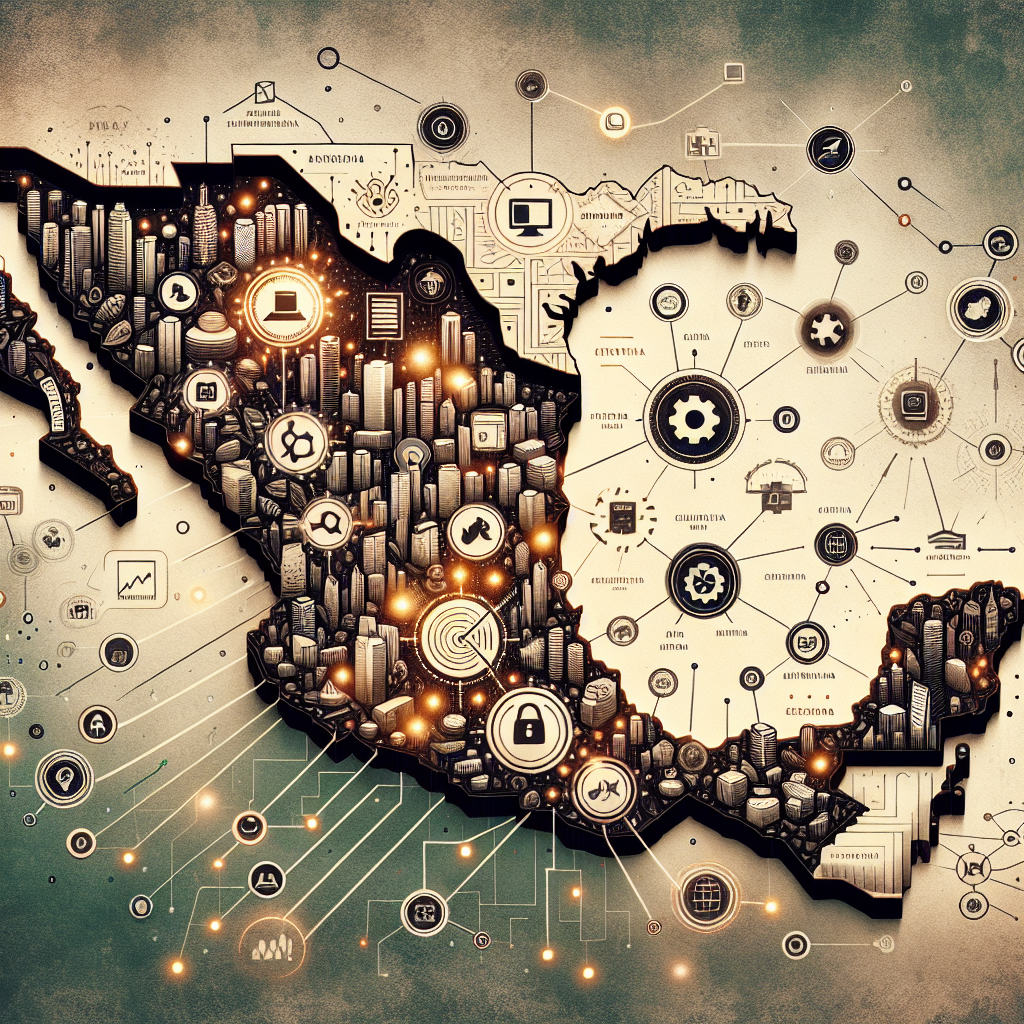
Mexico’s Other Tech Map: Inside the Rise of Regional Startup Hubs
Mexico’s startup story looks very different when you stop centering Mexico City. This white paper traces how Guadalajara, Monterrey, border cities like Tijuana, Mérida and the southeast, and emerging hubs such as Querétaro, León, and Puebla are building distinct tech identities shaped by local industry, culture, and cross‑border ties.

Abstract
From a distance, Mexico’s startup ecosystem can appear synonymous with Mexico City. The capital concentrates most major venture funds, media, accelerators, and government agencies, and Mexican fintech startups — many headquartered in Mexico City — raised about US$2.2 billion in 2024, or 74% of all VC invested in the country’s fintech sector [1]. Yet this capital‑centric lens increasingly obscures a more complex reality. Across Mexico, regional cities are building differentiated tech identities anchored in long‑standing industrial strengths, local universities, cross‑border dynamics, and shifting talent and lifestyle preferences.
This white paper reframes Mexico as a network of interconnected startup regions. It examines how Guadalajara leverages its electronics and R&D legacy, how Monterrey fuses industrial might with nearshoring, how border hubs like Tijuana and Ciudad Juárez operate as bi‑national laboratories, and how Mérida and the southeast attract remote‑first founders. It also explores emerging nodes such as Querétaro, León, and Puebla; maps talent flows and founder archetypes; and analyzes capital’s uneven geography. Drawing on recent ecosystem data and comparative examples, the paper argues that international investors and founders who focus only on Mexico City risk missing sector‑specialized, capital‑efficient opportunities elsewhere — and proposes a more nuanced, region‑by‑region way to engage with Mexico’s innovation landscape.
Background
The global narrative about Mexican tech has largely been written from a Mexico City vantage point. That perspective is understandable. The capital has accumulated both symbolic and material advantages: it hosts 11 unicorns, more than 350 startups, and a tech workforce exceeding 300,000 professionals, putting it ahead of many other Latin American cities in depth and density of innovation activity [2]. Mexico City also captures the lion’s share of venture capital; in 2024 alone, Mexican fintech startups drew roughly US$2.2 billion in funding, equivalent to nearly three quarters of all national VC in that vertical [1]. These numbers have cemented an image of Mexico’s startup scene as a singular, capital‑centered market.
Yet beneath that surface, Mexico has undergone a quiet process of regional differentiation. Historical industrial corridors — electronics in Jalisco, heavy industry in Nuevo León, automotive in Bajío states, aerospace in Querétaro, and export manufacturing along the northern border — have become scaffolding for localized startup ecosystems. These production clusters accumulated over decades as foreign manufacturers, domestic conglomerates, and global supply chains converged on cost‑competitive locations. As digital tools and data have become central to manufacturing, logistics, and services, the same clusters now provide fertile ground for industrial‑adjacent startups that can test and iterate in close proximity to real operations.
Universities and technical institutes are central to this story. Institutions such as the Universidad de Guadalajara and ITESO in Jalisco, regional engineering schools in Monterrey and the Bajío, and growing universities in the southeast are not merely talent pipelines; they function as innovation partners, much as universities do in U.S. and European second‑tier tech hubs [3][4]. Mexico’s experience fits a broader pattern visible in places like Philadelphia’s University City Science Center, Clemson’s International Center for Automotive Research, or Munich’s Quantum Entrepreneurship Lab, where academic institutions shape sector‑specific startup clusters through research, training, and structured collaboration with industry [9–11].
At the same time, macro trends are loosening the gravitational pull of the capital. As nearshoring, remote work, and cross‑border digital services expand, startups no longer need to be physically close to Mexico City’s financial district to compete. Guadalajara has attracted over 650 tech companies, including IBM, Intel, Meta and Google, helping the state of Jalisco draw around 6% of Mexico’s record US$36 billion in foreign direct investment (FDI) in 2023 [5]. Monterrey’s metropolitan area, anchored in manufacturing and logistics, accounted for 25.5% of all new VC‑backed startups in Latin America at one point in the last investment cycle [2]. Border cities such as Tijuana and Ciudad Juárez leverage binational infrastructure and talent to serve U.S. markets directly, supported by initiatives like Technology Hub in Ciudad Juárez, which since 2015 has hosted more than 100 high‑growth technology companies [6][7].
This evolving map matters for international investors, founders, and operators. A CDMX‑only lens can mislead in at least three ways. It suggests Mexico is a homogenous market rather than a mosaic of locally rooted opportunities. It amplifies verticals that naturally cluster in a political and financial capital — fintech, super‑apps, consumer marketplaces — while downplaying domains like logistics‑tech, industrial IoT, medtech, aerospace, and climate solutions that grow best near factories, ports, farms, or research centers. And it underestimates how lifestyle, safety perceptions, and cost‑of‑living differentials are redistributing talent to secondary cities such as Mérida.
Understanding Mexico as a network of regional ecosystems, each with its own founder archetypes, sector specializations, and cross‑border ties, is therefore essential. This paper offers a structured, evidence‑based narrative of that network, with an eye to the practical question international readers often ask: where in Mexico should I look for which kind of innovation?
Methods
This white paper synthesizes publicly available ecosystem analyses, startup databases, policy reports, and city‑ and state‑level investment summaries, combined with qualitative accounts of how founders and institutions operate in different Mexican regions.
The core quantitative grounding comes from specialized ecosystem reports and investment mappings. These include Mexico City startup ecosystem statistics from Startup Genome, which detail venture funding flows, sector shares, and talent pool size [1]; comparative analyses of Latin American tech hubs, which quantify the relative presence of VC‑backed startups and unicorns [2]; and Jalisco state investment and tech employment data, which track foreign direct investment and the scale of Guadalajara’s technology workforce [5][8]. Additional insight into emerging Mexican hubs comes from StartupBlink and local ecosystem portals that profile city‑level sector strengths and institutional initiatives [3].
To contextualize Mexico’s regional dynamics within global patterns, the paper draws selectively on case studies of university–industry collaboration in other second‑tier cities, such as Philadelphia’s healthtech‑focused University City Science Center, Clemson University’s automotive campus, and the Technical University of Munich’s Quantum Entrepreneurship Lab [9–11]. These international analogues are not used to infer unverified Mexican facts but to illustrate mechanisms by which local universities and technical institutes can anchor startup growth, such as shared research infrastructure, domain‑specific accelerators, or long‑term public–private partnerships.
Qualitative interpretations — such as typologies of founder archetypes or descriptions of how border hubs manage regulatory complexity — are derived from the documented characteristics of these ecosystems [6][7][12]. Where helpful, hypothetical startup scenarios are used to make concrete how specific sector and geographic conditions might intersect in practice; these are flagged as illustrative rather than factual profiles. Throughout, only data points explicitly supported by the research corpus are cited, and no claims are made about city‑level metrics not present in the provided sources.
Because ecosystem data are uneven across cities, the analysis emphasizes patterns and comparative dynamics rather than exhaustive quantification for every hub. The aim is to provide a robust conceptual framework and grounded examples, while recognizing that local details will continue to evolve.
Key Findings
Why the Ecosystem Looks CDMX‑Centric from the Outside
Mexico City’s dominance in the international narrative is anchored in hard numbers. The city hosts 11 unicorns and a startup base of about 353 companies, supported by a tech talent pool exceeding 300,000 professionals [2]. In 2024, Mexican fintech startups — many headquartered or operating key functions in the capital — attracted roughly US$2.2 billion in venture capital, comprising 74% of all VC funding into the country’s fintech sector that year [1]. Mexico City’s positioning as a national political and financial capital means regulators, major banks, media outlets, and large corporates are concentrated within a relatively compact urban area, reinforcing this gravitational pull.
This density shapes investor behavior and global perception. International funds setting up a Latin America beachhead often choose Mexico City for proximity to other VCs, deal flow, and policy conversations. Accelerators and corporate innovation programs follow, anchoring their Latin American cohorts or pilots in the capital. Media, pressed for time and visibility, routinely interview Mexico City‑based founders; their stories of fintech disruption and super‑app growth then become shorthand for “Mexican tech” in global coverage. The result is a feedback loop where visibility, capital, and talent reinforce each other inside the capital, even as other hubs quietly mature.
Analogous patterns appear elsewhere: London overshadows Manchester or Birmingham, São Paulo eclipses Porto Alegre, and Jakarta dominates narratives about Indonesian tech. In these countries, capital cities aggregate regulatory and financial clout, which naturally favors sectors like fintech, insurtech, and consumer marketplaces. Mexico City fits this mold. But just as the U.K. has deep healthtech and advanced manufacturing in its regions, Mexico hosts sector‑specialist ecosystems whose contributions are undercounted if one looks only at top‑line national funding figures.
In Mexico’s case, several regional hubs specialize deeply in sectors that do not naturally center in a financial and political hub: productized logistics tools designed near industrial corridors, medtech built beside manufacturing clusters, aerospace software from cities hosting advanced factories and research labs, or agri‑food innovation emerging near fields and processing plants. When viewed through aggregate funding data, these ecosystems may appear smaller. When assessed through the lens of sector expertise and fit with local demand, they often represent the most logical — and in some cases globally competitive — places from which to build in specific verticals.
Guadalajara: From “Mexico’s Silicon Valley” to a Specialized Tech Hub
Guadalajara earned its “Mexico’s Silicon Valley” nickname on the strength of decades of electronics manufacturing and multinational R&D investment. The city hosts more than 650 tech companies, including IBM, Intel, Meta (Facebook), and Google, many of which established design, testing, or back‑office engineering centers there [5]. This industrial pedigree has produced a concentrated engineering workforce: over 39,000 tech professionals, supported by institutions like the Universidad de Guadalajara and ITESO [8]. Jalisco state as a whole attracted around 6% of Mexico’s record US$36 billion FDI in 2023, with technology and advanced manufacturing as key drivers [5].
During earlier stages of Mexico’s tech narrative, Guadalajara was often cast as a generalized “Silicon Valley clone,” a place trying to emulate the Bay Area’s startup culture. The reality today is more specific and arguably more strategic. Rather than competing head‑on with Mexico City in neobanks or consumer super‑apps, Guadalajara’s startups increasingly focus on the seam where hardware and software meet: embedded systems, AI for industrial operations, dev tools for firmware teams, and B2B SaaS tightly coupled to manufacturing and logistics workflows [3].
A hypothetical example illustrates the logic: imagine a startup building AI‑driven predictive maintenance for factory equipment. In Guadalajara, founders can recruit engineers who spent years inside multinational R&D labs wiring sensors into machines, then add data scientists trained at local universities. They also sit a short drive away from factories that can serve as pilot customers, including plants operated by global electronics and automotive firms. This tight feedback loop between engineering talent, industrial partners, and demanding global customers is difficult to replicate in purely software‑oriented capitals.
Local institutions reinforce this specialization. Ecosystem platforms like the Guadalajara Startup Ecosystem Portal aggregate resources, events, and mentorship for entrepreneurs, fostering a community where manufacturing knowledge is as prized as coding skills [3]. University labs work with industry on applied projects, mirroring collaborations seen at Clemson’s CU‑ICAR campus or Munich’s Quantum Entrepreneurship Lab [10][11]. Corporate innovation labs from multinationals co‑located in the region create a pipeline of intrapreneurs who turn internal process improvements into standalone ventures.
Over time, these dynamics push Guadalajara’s identity away from a vague “Silicon Valley” analogy toward something closer to an applied engineering and industrial‑tech cluster. The city’s competitive edge lies in the cross‑pollination of hardware craftsmanship, software talent, and global manufacturing standards. For foreign companies seeking nearshore R&D or hardware‑software integration, Guadalajara is emerging not just as a low‑cost alternative but as a strategic partner location.
Monterrey: Industry, Nearshoring, and B2B Transformation
Monterrey’s ecosystem looks very different from Guadalajara’s, reflecting the city’s long‑standing industrial base and geographic proximity to the U.S. border. Historically home to conglomerates in steel, cement, glass, and manufacturing, the region has cultivated a business culture that is intensely B2B, export‑oriented, and comfortable with large‑scale operations [4]. Its location near major trade corridors into Texas makes it a prime beneficiary of nearshoring, as global firms reconfigure supply chains to be closer to North American customers.
These structural features are now translating into specific startup patterns. Monterrey has become a magnet for venture capital within Latin America, accounting for 25.5% of all new VC‑backed startups in the region in one recent period [2]. The city is especially fertile ground for B2B SaaS, supply chain optimization tools, and logistics‑tech. Digital freight forwarders and logistics platforms, such as those in the mold of Nowports and Skydropx, naturally gravitate to Monterrey’s environment, given the density of exporters and importers that can serve as anchor clients [4]. Industrial IoT ventures can test products inside factories that are already instrumented for quality and efficiency monitoring.
Funding and exits in Monterrey are shaped by the presence of large, often family‑controlled conglomerates. These business groups bring not only capital but also distribution channels, procurement networks, and political relationships. A typical founder archetype here might be an operations executive at a steel producer who spins out a software solution for inventory management into a standalone startup. Corporate‑backed angels and family offices may become first investors, with local corporates providing both pilot projects and, eventually, acquisition pathways.
This dynamic creates powerful scaling advantages for startups that solve real pain points in the industrial economy. It can also bias innovation toward incremental improvements for established industries rather than more disruptive models. For international investors, understanding which Monterrey startups are deeply entangled with legacy corporate structures — and which are using industrial proximity to build regionally or globally scalable products — is crucial. The same closeness to incumbents that accelerates commercialization can, if not managed carefully, constrain strategic choices or limit expansion beyond a narrow set of local partners.
Border Cities: Tijuana, Ciudad Juárez, and Cross‑Border Innovation
Border hubs such as Tijuana and Ciudad Juárez occupy a distinct niche in Mexico’s startup geography: they operate effectively as bi‑national ecosystems. Tijuana sits adjacent to San Diego, enabling founders and teams to live on one side of the border and work, sell, or raise capital on the other [6]. Ciudad Juárez, linked tightly to El Paso and broader U.S. manufacturing networks, has nurtured ecosystems like Technology Hub, which since 2015 has provided binational acceleration and workspace to more than 100 high‑growth technology companies [6].
Sectorally, these cities often specialize where cross‑border synergies are greatest: medtech and healthtech, particularly connected to medical‑device manufacturing; hardware ventures that combine Mexican production costs with U.S. design and commercialization; and creative and digital services priced for U.S. clients but delivered from Mexico. Many startups in these regions price their services in U.S. dollars and design products from day one to be compliant with U.S. standards, rather than adapting domestic offerings later.
Operating in border ecosystems also entails unique cultural and regulatory complexity. In Tijuana, for example, only about 25% of the population is proficient in English, even though cross‑border work demands bilingual capabilities [12]. Startups respond by aggressively recruiting bilingual staff and leveraging university language programs. Cultural training is common to bridge differences in work norms and expectations between Mexican and U.S. teams.
Regulatory navigation is equally challenging. Companies must comply with Mexican frameworks like the IMMEX program, which governs export‑oriented manufacturing, while also keeping pace with U.S. regulations embedded in the USMCA trade agreement [7]. Device makers and medtech startups may need to satisfy both Mexican health regulations and U.S. FDA requirements. Legal frameworks can shift with political cycles on both sides of the border, adding an additional layer of uncertainty.
Growth in these cities also strains physical infrastructure. Tijuana, for instance, has experienced significant population and industrial expansion, leading to traffic congestion and pressure on utilities that can affect logistics and daily operations [12]. To mitigate these issues, authorities and binational agencies have invested in infrastructure projects like the Otay Mesa East Port of Entry, expected to ease cross‑border trade by reducing wait times once fully operational [12]. Compared with inland hubs, border cities trade some operational predictability for superior access to U.S. markets, capital, and customers, making them especially attractive to bicultural founders comfortable operating in this complexity.
Mérida and the Southeast: Quality of Life, Niche Verticals, and Remote‑First
Far from the border and industrial corridors, Mérida and other southeastern cities are forming a different kind of tech proposition. Here, quality of life, perceived safety, and relatively low operating costs sit at the center of founders’ calculus. As remote and hybrid work models became mainstream following the COVID‑19 pandemic, teams that no longer needed to be in Mexico City began to ask where the best combination of connectivity, lifestyle, and talent existed; Mérida emerged as a compelling answer [4].
This shift is catalyzing a cluster of niche verticals tied to the region’s assets. Tourism‑tech startups experiment with new ways to manage hospitality inventory, tours, and cultural experiences across the Yucatán Peninsula. Proptech ventures explore models for fractional ownership or remote property management, attractive to domestic and international buyers seeking second homes or rental properties. Climate and sustainability solutions, as well as agri‑food innovation, draw on local agricultural activity and environmental vulnerability to hurricanes and warming seas [4]. For example, a startup measuring carbon sequestration in agroforestry projects can pilot its technology in nearby rural areas while selling to overseas buyers.
Universities in the southeast, though smaller than their central or northern counterparts, are increasingly relevant as sources of specialized talent and applied research. They offer programs in environmental sciences, tourism management, and engineering, and some partner with local government to support entrepreneurship centers or incubators. Government incentives and soft‑landing programs amplify this momentum. Local authorities view tech as a means to diversify economies long dependent on tourism and agriculture, and they experiment with policies ranging from co‑funding of coworking spaces to tax incentives for new ventures.
Remote‑first startups with customers elsewhere can base their product and operations teams in Mérida while maintaining sales presences in Mexico City, the U.S., or Europe. For international founders, this mix offers an appealing base of operations that can reduce burn without sacrificing access to markets — provided they are willing to travel frequently and build distributed networks rather than rely on dense local ecosystems.
Other Rising Nodes: Querétaro, León, Puebla
Beyond the better‑known hubs, several mid‑sized cities are turning industrial strengths into tech niches. Querétaro, for instance, has become a focal point for aerospace and advanced manufacturing, with a growing presence of data centers and high‑spec industrial parks [3]. This context naturally breeds startups focused on manufacturing software, quality‑control analytics, and supply chain visibility tools aimed at aerospace and high‑precision industries. As in Guadalajara and Monterrey, universities and technical institutes help by training specialized engineers and partnering with industry on applied research, echoing international models like Clemson’s International Center for Automotive Research in the United States [10].
León and Puebla are following similar trajectories, anchored in their own legacies. León’s history in leather goods and footwear has evolved into a broader fashion‑adjacent and automotive supply chain economy, creating opportunities for e‑commerce, retail‑tech, and manufacturing‑optimization startups [3]. Puebla, with its automotive plants and growing healthtech footprint, incubates ventures at the intersection of mobility, manufacturing, and healthcare. Local universities offer engineering, design, and medical programs that feed into these sectors.
In all three cities, local governments and chambers of commerce experiment with startup‑friendly policies and small‑scale funds, while universities provide talent and early‑stage R&D. Initiatives such as Idea GTO, based in nearby Guanajuato, illustrate how regional authorities are investing in incubation and acceleration programs to strengthen local ecosystems. These nodes may not yet appear prominently in international rankings, but for investors and operators looking for specialized B2B or industrial‑adjacent plays, they can offer more targeted opportunities than the headline hubs.
Talent Flows and Founder Archetypes
Beneath city‑level statistics lies a human layer: the movement of students, workers, and returning migrants who knit Mexico’s regional ecosystems together. Many students from smaller towns relocate to Guadalajara or Monterrey for university, particularly to study engineering, computing, or business [8]. They often gain early experience in multinational R&D centers or large industrial firms before transitioning into startups. Meanwhile, a wave of founders returning from the U.S. or Europe bring with them global networks, exposure to different startup cultures, and familiarity with foreign capital markets [4]. Some settle in Mexico City to be near investors; others choose to build in their hometowns, betting on lower costs, trusted relationships, and niche knowledge.
These flows create distinct founder archetypes by region. In Monterrey, the archetypal founder might be an industrial operator‑turned‑entrepreneur, fluent in factory floor realities and deeply connected to corporate procurement teams. In Guadalajara, they are often engineers with significant stints in multinational R&D labs, comfortable bridging hardware and software in complex systems [3][8]. In Tijuana or Ciudad Juárez, many founders are bicultural and binational, juggling English and Spanish markets and splitting time across the border [6][12]. Mérida and the southeast attract a different profile still: founders who are optimizing for family life and cost of living while building remote‑first products for global customers.
These archetypes shape company culture and strategy. Industrial founders often build sales‑led organizations with a strong emphasis on ROI and operational reliability, well‑suited to B2B SaaS and industrial IoT. R&D‑heavy teams in Guadalajara are more likely to prioritize technical depth and build complex products that require longer development cycles but potentially higher defensibility. Binational founders in border cities typically design go‑to‑market strategies that start in the U.S., leveraging familiarity with U.S. regulations and customer expectations from day one. Recognizing these regional founder profiles allows investors and partners to calibrate expectations: a Monterrey logistics‑tech startup will likely move differently from a Mexico City fintech, even if both raise seed rounds at similar valuations.
Capital and Support: Uneven but Evolving
Mexico’s venture capital infrastructure remains heavily concentrated in Mexico City. Most institutional funds, corporate venturing units, and international investors base their Mexican operations there, reinforcing the capital’s dominance in deal flow [1][2]. Founders in Guadalajara, Monterrey, or Mérida still frequently travel to Mexico City — or pitch via remote calls — to access sizable rounds, especially beyond seed. Guadalajara’s progress as a tech hub has not yet fully translated into a comparable density of investor entities, a gap that ecosystem analyses have highlighted [13]. Monterrey, despite its rising share of VC‑backed startups, is still building out its independent investor base [4].
Regional founders therefore assemble capital stacks creatively. Local angels and family offices, particularly in industrial regions like Monterrey and Querétaro, provide early checks and strategic guidance. Government programs and university‑linked funds offer grants, pre‑seed capital, or incubation. An example is Idea GTO in Guanajuato, which supports entrepreneurs via incubation and acceleration to spur a more robust ecosystem [4]. Corporate innovation programs, often launched by large local employers, function as quasi‑accelerators: they fund pilots, proof‑of‑concept projects, and sometimes equity investments.
Trends point toward gradual diversification. Region‑focused microfunds and community‑led coworking spaces are proliferating in second‑tier cities, mirroring patterns seen in U.S. cities like Omaha, where university‑backed initiatives such as the AI Learning Lab help seed local AI ecosystems [9]. As returns from successful regional startups recycle into the ecosystem, and as international investors become more comfortable investing outside Mexico City, we can expect a thicker layer of seed and Series A capital to emerge in Guadalajara, Monterrey, and perhaps Mérida or Querétaro. For now, however, capital geography remains a structural constraint for founders building away from the capital.
Comparative Analysis
Sector Specialization vs. Generalist Scale: Guadalajara, Monterrey, CDMX
When comparing Guadalajara, Monterrey, and Mexico City, one axis stands out: sector specialization versus generalist scale. Mexico City is a generalist hub with particular strength in fintech, due in part to regulatory proximity and concentration of financial institutions. Its 11 unicorns span payments, lending, e‑commerce, and mobility, reflecting an ecosystem that thrives on large domestic markets and consumer‑facing innovation [1][2].
Guadalajara and Monterrey, by contrast, are more specialized. Guadalajara’s 650‑plus tech firms and 39,000‑strong tech workforce concentrate in electronics, embedded software, and AI‑enabled applications tethered to manufacturing [5][8]. Monterrey leans toward logistics, industrial automation, and B2B SaaS serving heavy industry and supply chains [4]. The trade‑off is clear: Mexico City offers more horizontal opportunities and deeper capital pools but less industrial adjacency; Guadalajara and Monterrey provide sharper vertical focus but currently thinner investor networks.
For an international investor, this means that a generalist consumer app might be best situated in Mexico City, where marketing talent, partners, and fintech rails are dense. Meanwhile, a startup tackling predictive maintenance for factories may find Guadalajara’s industrial and R&D context far more valuable, while one addressing cross‑border trucking optimization could benefit more from Monterrey’s logistical corridors. Allocating capital without appreciating these sectoral comparative advantages risks misalignment between a startup’s needs and a city’s strengths.
Border Hubs vs. Inland Cities: Market Access and Complexity
Border cities like Tijuana and Ciudad Juárez offer immediate access to U.S. markets but at the price of higher regulatory and cultural complexity. Their ecosystems are wired for binational operations: founders manage compliance with both Mexican programs like IMMEX and U.S. frameworks tied to USMCA, and they navigate labor markets where only about a quarter of the local population may be fluent in English [7][12]. Investments in infrastructure, such as the Otay Mesa East Port of Entry, aim to relieve congestion and improve trade efficiency, highlighting how physical infrastructure and startup growth are intimately linked in border regions [12].
Inland hubs such as Guadalajara, Monterrey, and Mérida do not face the same level of daily cross‑border friction. They often enjoy more predictable local regulatory environments and less infrastructure strain, but they lack the immediacy of U.S. customer access. For a medtech startup needing frequent in‑person interactions with U.S. hospitals, Tijuana’s location may outweigh its complexities. Conversely, a SaaS startup serving global customers from the cloud may benefit more from Guadalajara’s or Mérida’s stability and talent pools than from border proximity. These trade‑offs underscore that “best” location is relative to a company’s regulatory exposure, customer geography, and tolerance for operational ambiguity.
Lifestyle and Cost: Mérida vs. Major Industrial Hubs
Mérida and the southeast compete on a different dimension: quality of life and cost structures. Compared with industrial hubs like Monterrey or dense megacities like Mexico City, Mérida offers lower living costs, shorter commute times, and perceptions of higher safety, which have become salient as remote work untethers many startups from specific locations [4]. For early‑stage companies seeking to extend runway, basing engineering and product teams in Mérida while selling into Mexico City or the U.S. can materially change burn dynamics.
However, these advantages come with trade‑offs. Mérida lacks the large corporate anchors that provide enterprise customers and spin‑out talent in Guadalajara and Monterrey. The density of experienced scale‑up operators is thinner, and local capital pools are smaller. Founders must lean more heavily on remote networks, online communities, and periodic travel to larger hubs for fundraising and partnerships. Over time, as more founders choose Mérida for lifestyle reasons and succeed, these constraints may ease, just as smaller U.S. cities have evolved from “quality‑of‑life” choices into credible tech hubs. But in the near term, founders and investors must be realistic about what a Mérida base can and cannot provide natively.
Emerging Nodes: Querétaro, León, Puebla vs. Established Hubs
Querétaro, León, and Puebla exemplify a third comparative category: industrially rich but ecosystem‑young cities. They share key features with more established hubs — significant manufacturing bases, sector‑specific specializations, and active universities — but lack the density of startups, investors, and support institutions found in Mexico City, Guadalajara, or Monterrey. As such, they often offer better access to specific industrial partners and lower competition for talent, while requiring more effort to assemble capital, mentorship, and experienced operators.
For investors and founders, these emerging nodes can function as strategic “outposts” tied into broader national or international networks. A startup headquartered in Mexico City might locate its R&D or pilot operations in Querétaro to be closer to aerospace clients, or in León to work with automotive suppliers. Over time, as local ecosystems mature, these cities may evolve from supporting roles into primary hubs for particular verticals.
Related Articles

Who Stole the Value? A Forensic Audit of Giants, Startups, and the Customer Left Out of the Deal
Treating today’s innovation economy as a crime scene, this essay investigates what quietly disappears when incumbents and startups reshape finance, health, retail, mobility, education, and climate tech. Beyond pitch decks and marble lobbies, who actually captures the value—and at what human cost?

The Year We Misread the Checkbox: How a Single UX Choice Rewired Giants and Startups
Writing from 2050, a radical futurist looks back on 2024 and argues that the true battle between traditional industries and startups in banking, retail, health, and mobility never took place in boardrooms or pitch decks, but inside a single, tiny UX artifact: the checkbox. By following that microscopic element, this manifesto rewrites the history of incumbents vs. startups as a struggle over who controls consent, data, and time.

The scene of the silent crime: where has courage been lost between giants and startups?
A monk‑analyst steps onto the “crime scene” of the digital economy—financial services, retail, healthcare, mobility, education, and manufacturing—to investigate a silent disappearance: the deeper value that customers, workers, and communities expected from the transformation between traditional industry and the startup ecosystem.