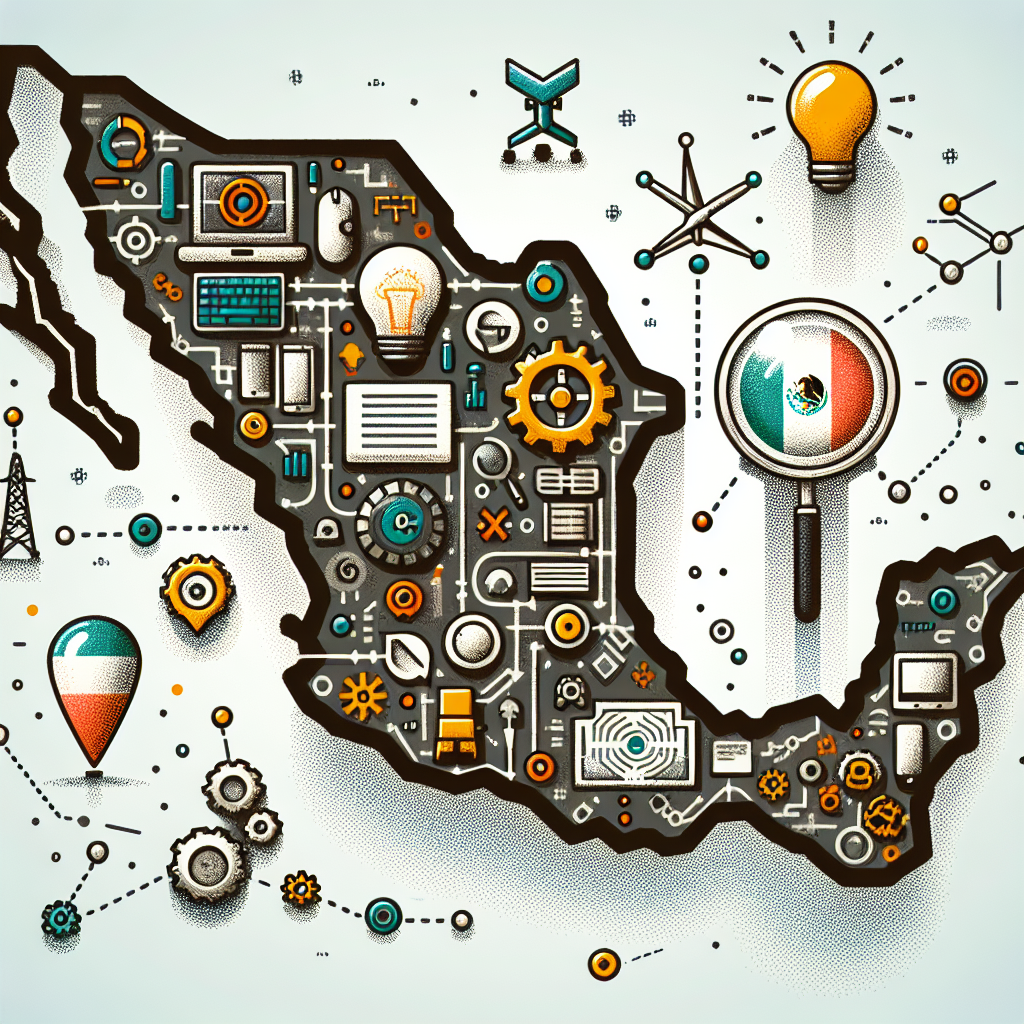
Beyond Mexico City: How Regional Tech Hubs Are Rewriting Mexico’s Innovation Map
Mexico’s startup story is no longer confined to Mexico City. Emerging tech ecosystems in Guadalajara, Monterrey, Tijuana, Mérida, Querétaro, and other cities are developing distinctive sector specializations, policy frameworks, and talent dynamics. Together, they are creating a more distributed, resilient, and competitive national innovation system. This white paper analyzes the drivers, opportunities, and challenges of Mexico’s new techno‑regionalism and offers practical guidance for founders, investors, and policymakers.

Abstract
Mexico’s innovation narrative has long centered on Mexico City, but a new geography of entrepreneurship is taking shape. Regional hubs such as Guadalajara, Monterrey, Tijuana, Mérida, Querétaro, and other cities are building differentiated technology ecosystems anchored in local industry strengths, universities, and policy frameworks. This paper examines how these emerging centers of specialization—ranging from creative software and hardware in Guadalajara to industrial and B2B SaaS in Monterrey, border logistics in Tijuana, tourism‑ and climate‑tech in the southeast, and advanced manufacturing in the Bajío—are collectively reshaping Mexico’s startup landscape.
Drawing on recent policy developments, including state‑level incentives in Jalisco and Nuevo León and nationwide measures under the “Plan Mexico” strategy, as well as comparative evidence from other regional innovation ecosystems, the analysis argues that Mexico is moving toward a polycentric, techno‑regional model of growth [1][2][3]. The paper explores implications for talent flows, capital allocation, and institutional collaboration, and it assesses both the opportunities and constraints facing regional ecosystems. It concludes with recommendations for founders, investors, and policymakers who seek to capitalize on Mexico’s distributed innovation map over the next decade.
Background
For more than a decade, international conversations about Mexican startups have largely defaulted to a single mental image: Mexico City as the country’s entrepreneurial epicenter. The capital has played that role convincingly, becoming a magnet for fintech, marketplaces, and consumer apps, as well as the preferred entry point for Latin American and global venture capital. Its density of investors, accelerators, co‑working spaces, and media has generated a self‑reinforcing cycle of visibility and capital that remains powerful today.
Yet this capital‑centric lens increasingly obscures as much as it reveals. Beneath the surface, a quiet transformation is underway as regional cities leverage their industrial bases, universities, and quality‑of‑life advantages to build their own technology clusters. Guadalajara—long branded as “Mexico’s Silicon Valley”—has transitioned from a hardware assembly outpost to a creative and software powerhouse, while Monterrey has digitized its industrial DNA into a fertile ground for Industry 4.0 and B2B SaaS. Border cities such as Tijuana have turned geographic proximity to the United States into a springboard for logistics and healthtech innovation, and southeastern cities like Mérida are exploiting tourism, sustainability challenges, and remote‑work inflows to experiment with new service and climate‑related technologies.
This decentralization reflects broader Latin American patterns: major capitals like São Paulo or Bogotá host dense startup ecosystems, yet regional hubs often struggle with funding access, mentorship, and regulatory fragmentation [5][6][7]. In Mexico, these constraints are real but are being actively mitigated by new national and state‑level policies. Jalisco, for example, has set up innovation parks and grants to attract research and development (R&D) centers to Guadalajara, explicitly targeting technology firms [1]. Nuevo León has complemented Monterrey’s industrial base with payroll tax reductions for automation and IT companies [1]. At the federal level, the “Plan Mexico” strategy has added nationwide tax incentives for fixed‑asset investment and training in innovation‑intensive activities [2].
Against this backdrop, the geography of Mexican innovation is shifting from a single dominant hub to a distributed, multi‑node network of specialized regions. Understanding how and why these hubs are emerging, and what they mean for founders, investors, and policymakers, is essential for anyone seriously considering Mexico’s tech future.
Methods
This white paper synthesizes recent policy, ecosystem, and comparative research to construct a coherent view of Mexico’s emerging regional tech landscape. The analysis begins from documented descriptions of Mexico’s key regional hubs and their sectoral focuses, including Guadalajara’s positioning in software and creative industries, Monterrey’s industrial and B2B technology orientation, Tijuana’s cross‑border logistics and healthtech activity, Mérida’s tourism‑ and climate‑related innovation, and Querétaro and the broader Bajío region’s automotive and aerospace specialization.
To ground the discussion in concrete policy frameworks, we draw on evidence of regional incentives and federal measures. These include Jalisco’s innovation parks and R&D grants, Nuevo León’s payroll tax reductions for automation and IT firms, and nationwide tax incentives introduced under the “Plan Mexico” strategy, which feature accelerated depreciation for new fixed asset investments between 2025 and 2030 and additional deductions for training and innovation expenditures [1][2]. We also incorporate details from nearshoring‑related tax measures implemented between October 2023 and December 2024, which target sectors like electronics, medical equipment, and automotive components [3].
Because systematic quantitative data on Mexico’s regional startup hubs remain fragmented, the paper complements Mexico‑specific information with international comparative evidence about the role of universities and regional institutions in fostering innovation. Examples include university‑led hubs in Illinois in the United States, the Technical University of Darmstadt’s HIGHEST center in Germany, and Portuguese university–incubator collaborations [4]. We also examine research on Latin American startup challenges around funding, mentorship, and regulatory complexity to situate Mexico’s regions within a broader continental trend [5][6][7].
Throughout, the paper employs interpretive, causal reasoning—rather than statistical modeling—to link sector specialization, talent flows, and policy design with the observed rise of regional tech ecosystems.
Key Findings
1. A New Map of Mexico’s Emerging Tech Regions
Mexico’s startup geography is becoming visibly more polycentric, with distinct city‑regions evolving into recognizable hubs. Guadalajara now leverages its legacy as “Mexico’s Silicon Valley” to attract creative software, design‑driven products, and select hardware ventures. The state of Jalisco has reinforced this shift by establishing innovation parks and offering grants to firms that set up R&D centers, explicitly aiming to convert the region’s electronics heritage into a broader technology innovation platform [1]. This combination of institutional support and a growing talent base is gradually turning Guadalajara into a preferred alternative to Mexico City for software‑first startups that value lower operating costs and closer ties to engineering talent.
Monterrey, by contrast, has doubled down on its industrial roots. Long a manufacturing powerhouse, the city and the state of Nuevo León are repositioning themselves as centers for industrial digitalization, automation, and B2B SaaS. Payroll tax reductions targeted at automation and IT companies have been introduced to attract high‑tech manufacturing and R&D activities, explicitly leveraging the region’s proximity to the U.S. market [1]. The result is a cluster where startups can rapidly validate solutions with large industrial clients in sectors like automotive, logistics, and process manufacturing.
Border cities such as Tijuana are becoming testbeds for logistics, cross‑border e‑commerce, and health‑related technologies. Their proximity to the United States—especially to California—provides access to both demand and benchmark markets in healthcare, e‑commerce, and supply chain management. Startups in Tijuana can pilot cross‑border shipping solutions, medical device services, or telemedicine offerings within binational customer bases, something that is structurally harder to replicate from Mexico’s interior. Meanwhile, Mérida and other southeastern cities use their tourism economies and environmental vulnerabilities as laboratories for tourism‑tech and climate innovation, positioning themselves as remote‑work hubs with emerging sustainability‑oriented ventures.
2. Sector Specialization Driven by Legacy Industries and Universities
Regional specialization is not happening by chance. It rests on a logic that combines existing industrial footprints, university capabilities, and market proximity. Monterrey’s industrial heritage is the clearest example: clusters of automotive, steel, and logistics companies have created sophisticated demand for automation, predictive maintenance, and supply‑chain analytics. A startup building an Industry 4.0 platform for factory monitoring can find its first pilot clients within a short radius of the city’s industrial parks, gaining data and validation that dramatically reduce product‑market fit risk.
Guadalajara’s university system, with engineering‑focused programs and a strong creative arts tradition, has facilitated a different profile of specialization. Software developers, UX designers, and multimedia professionals form cross‑functional teams that are well suited for creative SaaS products—such as tools for digital content creation, collaborative design, or media workflows. Jalisco’s R&D‑oriented grants and innovation parks further incentivize companies to conduct experimentation locally, leaving Mexico City to focus more on sales and capital markets [1]. This configuration resembles the pattern observed in other global mid‑sized tech cities like Darmstadt in Germany, where university‑run startup centers provide laboratory space, networking, and training, helping the city achieve a startup density of 9.1 new companies per 100,000 inhabitants [4].
In the border region, proximity to California’s healthcare and logistics markets shapes local specialization. Tijuana‑based startups can co‑develop healthtech tools with clinics serving both U.S. and Mexican patients, or design cross‑border e‑commerce platforms that integrate U.S. warehousing with Mexican fulfillment centers. Similarly, Mérida and Cancún’s tourism economies generate demand for hospitality‑tech solutions in bookings, guest experience, and operations, while the region’s exposure to climate risks encourages experimentation with climate‑resilience technologies, sustainable building, and environmental monitoring.
3. Policy and Incentive Architecture Underpinning Regional Growth
State‑level and federal policy changes are supplying an enabling environment that magnifies these sectoral specializations. Jalisco’s innovation parks and R&D grants exemplify how subnational governments can tilt their economies toward higher‑value technology activities by subsidizing experimentation and infrastructure [1]. By reducing the upfront cost of establishing a tech R&D presence, these measures make Guadalajara more competitive in attracting both domestic and foreign firms.
Nuevo León’s strategy in Monterrey operates through tax levers: payroll tax reductions for automation and IT companies are designed to attract firms that can push the regional manufacturing complex up the value chain [1]. These benefits dovetail with the broader nearshoring wave, as global companies reassess supply chains and look to relocate production closer to North American markets. According to U.S. trade sources, Mexico has implemented immediate tax deductions for qualified new fixed assets acquired between October 12, 2023, and December 31, 2024, with a special emphasis on sectors such as electronics, medical equipment, and automotive components [3]. This national incentive effectively boosts regions like Monterrey, Querétaro, and the Bajío, where these industries are concentrated.
At the federal level, “Plan Mexico” introduces a further layer of incentives valid from January 22, 2025, to September 30, 2030. These include accelerated depreciation for investments in new fixed assets and an additional 25% deduction for increases in training and innovation expenses during fiscal years 2025–2030 [2]. While these benefits apply nationwide, their real impact is heavily mediated by regional readiness. Cities with active industry clusters and university‑industry ties—such as Querétaro’s aerospace sector or León’s automotive activities—are better positioned to convert tax incentives into actual startup demand, pilots, and scale‑up pathways.
4. Talent Dynamics: From Brain Drain to Brain Circulation
Historically, ambitious Mexican technologists and entrepreneurs followed a familiar trajectory: move to Mexico City or leave the country altogether. This pattern mirrored broader Latin American dynamics, where regional cities often suffer from a shortage of mentors and experienced founders, making it harder for startups to scale [5][6]. As a result, regional hubs across the continent routinely report gaps in early‑stage funding and role models, pushing entrepreneurs to relocate or bootstrap for longer periods.
In Mexico, several forces are beginning to reverse this one‑way brain drain. First, the rise of viable startup opportunities in regional hubs means skilled workers can return to their home cities without sacrificing career progression. Engineers who spent years in Mexico City or abroad now find roles in Monterrey’s industrial tech startups or Guadalajara’s software firms, bringing with them practices and networks acquired in larger markets. Second, hybrid team structures—where leadership or sales might be based in Mexico City while product and engineering are located in Guadalajara or the Bajío—have become more feasible with remote collaboration norms.
Additionally, lifestyle‑oriented migration is feeding a new layer of talent into cities like Mérida and Guadalajara, which have gained reputations as attractive remote‑work destinations. Digital nomads and remote employees introduce different work cultures and expectations, from agile methodologies to global product sensibilities. Over time, this “brain circulation” can raise the skill baseline of local ecosystems, much as regional universities and hubs elsewhere—like those supported by the U.S. National Science Foundation’s $18.6 million investment in emerging research institutions—aim to do by deepening university–industry collaboration [8].
5. Capital Flows and the Emerging Investment Thesis
While Mexico City still concentrates the majority of venture capital, investors are increasingly scouting regional hubs for differentiated deal flow. This shift reflects a broader Latin American reality: outside major capitals, startups face more limited access to early‑stage funding and mentorship [5][6]. Yet for investors willing to look beyond the capital, regional ecosystems offer compelling value propositions—specialized verticals, closer industry access, and often more favorable valuations due to lower competition.
Mexican and international venture firms are beginning to articulate explicit theses around regional strengths: “border logistics tech” in Tijuana, “Bajío manufacturing‑tech” in Querétaro and León, and “southeast climate and tourism‑tech” in Mérida and Cancún. Relationships with local accelerators, chambers of commerce, and universities become crucial mechanisms for sourcing these deals, echoing how universities and municipal incubators collaborate in Portugal to provide specialized knowledge and resources for regional entrepreneurial ventures [4]. As investors deepen these local ties, they help close mentorship gaps and bring pattern‑recognition capabilities that are often missing outside the capital.
Nevertheless, constraints remain clear. Deal density in regional cities is still lower than in Mexico City, limiting the ability of funds to achieve scale with exclusively regional portfolios. Local angel networks are thinner, and exits remain relatively rare, which slows the recycling of capital into new ventures. Yet these same limitations create room for first movers to build strong positions in underserved verticals. In a context where tax incentives like those under “Plan Mexico” lower the cost of fixed‑asset and training investments across industries [2], the upside for investors who engage early with regional hubs is substantial.
Table 1. Illustrative Regional Specializations and Policy Enablers
| Region / City | Dominant Legacy Industries | Emerging Tech Specializations | Key Policy / Institutional Enablers |
|---|---|---|---|
| Guadalajara (Jalisco) | Electronics, hardware assembly | Creative software, SaaS, some hardware & design tools | Innovation parks, R&D grants [1] |
| Monterrey (Nuevo León) | Manufacturing, automotive, logistics | Industry 4.0, automation, B2B SaaS, industrial analytics | Payroll tax cuts for IT & automation [1] |
| Tijuana (Baja California) | Maquiladora manufacturing, healthcare | Border logistics, cross‑border e‑commerce, healthtech | U.S. market proximity, binational industry ties |
| Mérida / Southeast | Tourism, real estate, services | Tourism‑tech, proptech, climate & sustainability tech | Remote‑work attractiveness, tourism clusters |
| Querétaro / Bajío | Automotive, aerospace, advanced manufacturing | Manufacturing‑tech, mobility, industrial IoT | Aerospace & automotive clusters, federal nearshoring incentives [2][3] |
Comparative Analysis
CDMX vs. Regional Hubs: Density vs. Specialization
Mexico City maintains clear advantages in ecosystem density: most major funds, corporate innovation programs, and startup‑oriented service providers are concentrated there. This yields faster serendipity, richer peer networks, and easier access to capital. However, density comes with higher costs and more competition for attention. In contrast, regional hubs trade some of this density for specialization and deeper integration with local industries. A Monterrey startup building predictive maintenance software can test with multiple factories within a tight radius, while a Guadalajara SaaS company can hire from a deep pool of engineers without competing head‑to‑head with as many consumer‑focused startups.
From a founder’s perspective, the choice increasingly resembles a trade‑off between “ecosystem thickness” and “vertical depth.” Mexico City offers breadth—access to multi‑sector investors and media—whereas regional hubs offer depth in specific verticals, alongside lower cost structures. Over time, this dynamic could encourage more distributed company structures: headquarters or commercial operations in Mexico City to capture investor and customer mindshare, with R&D and specialized functions embedded in the regions best aligned with the startup’s sector. The net effect is a more polycentric innovation system where no single city dominates every stage of the entrepreneurial value chain.
Mexico’s Regional Hubs vs. Other Latin American Regions
Compared with regional hubs in countries like Colombia, Brazil, or Argentina, Mexico’s emerging ecosystems benefit from an additional layer of policy support. Whereas many Latin American regional startups struggle with limited early‑stage funding and complex, fragmented regulations that hinder cross‑border expansion [5][7], Mexico’s federal incentives—such as immediate deduction for new fixed assets (2023–2024) [3] and the 2025–2030 “Plan Mexico” tax package [2]—create a more unified national framework that regional cities can leverage.
Nevertheless, Mexican regional hubs share familiar constraints with their Latin American peers: thinner local mentorship networks and fewer repeat founders, especially outside the capital [6]. The difference lies in Mexico’s proximity to the U.S. market and its role in North American supply chains, which give border cities and manufacturing regions an unusual degree of strategic leverage. Tijuana’s cross‑border position, for example, allows startups to integrate directly with U.S. logistics and healthcare systems—an opportunity that border cities in other Latin American countries rarely match at similar scale.
Mexican Regional Universities vs. Global Regional Innovation Anchors
Regional universities in Mexico are playing roles that mirror successful models abroad. In the United States, institutions like Eastern Illinois University and Governors State University are building regional hubs and supply chain innovation centers, offering incubators and consulting to drive local economic growth [4]. Similarly, the Technical University of Darmstadt’s HIGHEST center in Germany illustrates how a university‑run startup platform can make a mid‑sized city a national innovation leader [4].
Mexican universities in Guadalajara and Monterrey, though facing resource constraints, are moving in the same direction. They collaborate with local industries through incubators and tech transfer offices, facilitating pilot projects and talent pipelines tailored to regional sectors. When combined with federal tax incentives for training and innovation expenses (including the 25% extra deduction for such costs between 2025 and 2030) [2], these institutions can significantly raise the absorptive capacity of regional ecosystems. Over time, this alignment between academia, policy, and industry could make Mexico’s regional hubs competitive with international peers, particularly in niche domains like automotive and aerospace engineering in the Bajío.
Table 2. Timeline of Key Policy Drivers for Regional Tech Growth
| Year / Period | Policy / Initiative | Geographic Reach | Expected Impact on Regional Hubs |
|---|---|---|---|
| Pre‑2023 | Jalisco innovation parks & R&D grants [1] | Guadalajara / Jalisco | Attracts R&D centers, strengthens software & hardware innovation |
| Pre‑2023 | Nuevo León payroll tax cuts for IT & automation [1] | Monterrey / Nuevo León | Draws automation, industrial tech, and B2B SaaS firms |
| Oct 12, 2023–Dec 31, 2024 | Immediate deduction for new fixed assets [3] | Nationwide, sector‑specific | Boosts investment in electronics, medical equipment, auto components, favoring industrial regions |
| Jan 22, 2025–Sep 30, 2030 | “Plan Mexico” tax incentives [2] | Nationwide | Accelerated depreciation and 25% extra training/innovation deduction, encouraging tech‑intensive investments especially in prepared regions |
Case Studies
Case 1: A Guadalajara SaaS Startup Leveraging Creative Talent
Consider a software startup founded by alumni of Guadalajara’s engineering and design programs. Initially tempted to relocate to Mexico City for fundraising, the founders decide to base their product and engineering teams in Guadalajara to tap into the city’s creative and technical talent. They secure a small grant from a Jalisco innovation program to build an R&D lab focused on collaborative design tools [1]. Local universities help them recruit interns and run usability studies with design students.
Meanwhile, the company maintains a small sales office in Mexico City to interface with investors and corporate clients. This dual‑city strategy allows them to keep development costs manageable while benefiting from the capital’s commercial reach. Over time, the startup becomes recognized as a leader in creative SaaS, with clients across Latin America. Its success reinforces Guadalajara’s reputation as a hub where creative industries and software engineering intersect, attracting further startups and talent into the ecosystem.
Case 2: Monterrey’s Industrial Tech Scale‑Up
In Monterrey, an industrial analytics company emerges from a corporate–university collaboration. The founders, former engineers at a major automotive supplier, identify recurring inefficiencies in machine maintenance across several factories. With support from a university incubator and a pilot contract from a local industrial group, they build a predictive maintenance platform that connects to existing factory equipment.
Nuevo León’s payroll tax incentives for automation and IT firms lower the company’s early hiring costs, making it feasible to assemble a strong technical team [1]. As nearshoring accelerates and multinational manufacturers expand Mexican operations, the startup’s proximity to large plants becomes a strategic asset. Within a few years, it secures customers across the Bajío’s automotive corridor and negotiates partnerships in the United States. The company’s trajectory showcases how a regionally rooted startup can scale by embedding itself deeply in local industrial value chains while branching out internationally.
Case 3: Tijuana’s Cross‑Border Healthtech Venture
A healthtech startup in Tijuana is founded by a Mexican physician trained in California and a local software engineer. Observing gaps in care coordination for patients who shuttle between U.S. and Mexican clinics, they design a bilingual telemedicine and records‑management platform tailored to cross‑border healthcare. Early pilots involve clinics on both sides of the border.
Tijuana’s location allows the founders to regularly meet with U.S. providers while building their development team locally at lower cost. Mexican federal tax measures that favor investment in medical equipment and related technologies between 2023 and 2024 [3] help their partner clinics upgrade hardware necessary for telehealth deployment, indirectly supporting the startup’s rollout. The venture illustrates how border cities can become launchpads for binational innovation that taps both Mexican and U.S. demand, reinforcing the unique role of regional hubs in Mexico’s broader tech narrative.
Limitations
The analysis presented here is constrained by the relative scarcity of granular, public quantitative data on Mexico’s regional startup ecosystems. Many of the most detailed statistics available focus on national‑level venture investment or are heavily skewed toward Mexico City, leaving gaps in our understanding of deal volume, founder demographics, and sector‑specific growth trajectories in cities like Mérida, Tijuana, or León. As a result, some conclusions necessarily rely on qualitative inference and analogy with documented patterns in other regions.
Moreover, the paper extrapolates from policy frameworks and institutional initiatives whose full impact will only become visible over time. For instance, the accelerated depreciation and training‑related deductions under “Plan Mexico” are scheduled from 2025 to 2030 [2]. Their real effect on startup creation and scaling will depend on factors such as macroeconomic stability, political continuity, and corporate appetite for innovation. Similarly, while examples from the United States, Germany, and Portugal demonstrate the importance of regional universities in fostering entrepreneurship [4][8], Mexican institutions operate under distinct budgetary, regulatory, and cultural conditions. Direct transposition of international experiences should therefore be treated with caution.
Finally, regional ecosystems are heterogeneous even within states. The dynamics in Querétaro’s aerospace cluster, for example, may differ significantly from those in neighboring cities focused on agri‑food or services. This paper necessarily aggregates these nuances to draw a coherent national‑level picture of techno‑regionalism. Future research would benefit from city‑by‑city casework, founder surveys, and longitudinal tracking of startup outcomes.
Implications
For founders, the rise of regional hubs in Mexico broadens the strategic menu of where to build and scale. Rather than viewing Mexico City as the default location for all functions, entrepreneurs can distribute operations according to comparative advantage: R&D in Guadalajara for creative and software‑intensive products, industrial pilots and partnerships in Monterrey or the Bajío, tourism‑tech deployments in Mérida or Cancún, and corporate or investor relations in the capital. This modular approach can reduce costs, deepen sectoral integration, and increase resilience by avoiding over‑reliance on a single city.
Investors, in turn, face an opportunity to refine their sourcing and portfolio design strategies. Engaging with local accelerators, university incubators, and industry chambers in regional hubs can surface differentiated deals that are less visible from Mexico City alone [4]. Funds that develop explicit regional theses—such as logistics and healthtech in border cities or manufacturing‑tech in industrial corridors—may be better positioned to identify emerging category leaders early. However, they must also invest in building mentorship capacity and governance support, addressing the weaker local experience base that has historically constrained regional startups across Latin America [5][6].
For policymakers and ecosystem builders, the central challenge is to embrace techno‑regionalism rather than attempting to replicate Mexico City’s broad‑based model. This means designing policies and programs that amplify local sector strengths, while ensuring interoperability across regions through coherent national incentives and regulatory alignment. Federal initiatives like “Plan Mexico” [2] and nearshoring‑related tax deductions [3] can provide the horizontal framework, while states focus vertically on their niche industries. If executed well, this polycentric strategy could position Mexico as a multi‑hub tech nation and a more attractive partner for global innovation networks.
Conclusion
Mexico’s startup narrative is undergoing a quiet but consequential transformation. While Mexico City will remain a central hub for capital, media, and national policy, emerging ecosystems in Guadalajara, Monterrey, Tijuana, Mérida, Querétaro, and other cities are increasingly shaping the country’s innovation trajectory. These regional hubs are not simply smaller replicas of the capital; they are developing distinct sectoral identities rooted in local industries, universities, and cross‑border linkages.
Policy innovations—from Jalisco’s R&D parks and Nuevo León’s automation‑focused tax incentives to nationwide measures under “Plan Mexico” and nearshoring‑driven asset deductions—are reinforcing this shift [1][2][3]. At the same time, changing talent dynamics and investor behavior are converting what was once a one‑way brain drain into a pattern of brain circulation and distributed experimentation. Mexico’s emerging techno‑regionalism holds the promise of a more resilient, competitive, and diversified national startup ecosystem, one that can weather localized shocks and speak to multiple global markets simultaneously.
For global founders, investors, and corporate innovators, the implication is clear: understanding Mexico’s tech future requires looking beyond the capital. Those who engage early and thoughtfully with the country’s regional hubs—co‑designing products with local industries, partnering with universities, and aligning with sector‑specific strengths—will be better placed to capture the upside of Mexico’s next decade as a multi‑hub tech nation.
References
[1] “Industrial Automation’s Connection to Growth,” LinkedIn article on regional incentives in Jalisco and Nuevo León, including innovation parks, R&D grants, and payroll tax reductions for automation and IT companies. https://www.linkedin.com/pulse/industrial-automations-connection-growth-llote
[2] EY Tax News, “Mexico offers new tax incentives applicable across all industries and geographies under ‘Plan Mexico’ strategy,” detailing accelerated depreciation for new fixed assets (2025–2030) and an additional 25% deduction for training and innovation expenses. https://taxnews.ey.com/news/2025-0303-mexico-offers-new-tax-incentives-applicable-across-all-industries-and-geographies-under-plan-mexico-strategy
[3] International Trade Administration, U.S. Department of Commerce, “Mexico Nearshoring Incentives,” describing immediate deduction for new fixed assets acquired between October 12, 2023, and December 31, 2024, with emphasis on electronics, medical equipment, and automotive components. https://www.trade.gov/market-intelligence/mexico-nearshoring-incentives
[4] Soft Landing in European Innovation Ecosystems, “Innovation & Startup Ecosystems,” including case descriptions of the Technical University of Darmstadt’s HIGHEST center and regional university–incubator collaborations in Portugal. https://softlanding.unite-university.eu/innovation-ecosystems
[5] AMR Industries, “Startups in Latin America vs Global Markets: Unique Challenges and Key Opportunities,” discussing limited access to early‑stage funding in regional Latin American hubs. https://www.amrindustries.tech/news/startups-in-latin-america-vs-global-markets-unique-challenges-and-key-opportunities
[6] Desarrollo Económico, report on regional entrepreneurship in Latin America, highlighting mentorship gaps and the scarcity of seasoned local role models in non‑capital cities. https://desarrolloeconomico.org/storage/publications/emUjTu5JEgYqAHMPTGUWs4CdSzvtafLOcpmqdyIq.pdf
[7] Ladera Sur / L.A.D.P. Blog, “Investors’ Roundtable: A Stronger Regional Ecosystem,” examining regulatory fragmentation and its impact on Latin American startups expanding across borders. https://blog.ladp.io/p/investors-roundtable-a-stronger-regional
[8] U.S. National Science Foundation (NSF), “NSF invests $18.6M for emerging research institutions to grow their capacity to participate in regional innovation ecosystems,” describing support for university–industry partnerships in regional hubs. https://www.nsf.gov/tip/updates/nsf-invests-186m-emerging-research-institutions-grow-their
Related Articles

Who Stole the Value? A Forensic Audit of Giants, Startups, and the Customer Left Out of the Deal
Treating today’s innovation economy as a crime scene, this essay investigates what quietly disappears when incumbents and startups reshape finance, health, retail, mobility, education, and climate tech. Beyond pitch decks and marble lobbies, who actually captures the value—and at what human cost?

The Year We Misread the Checkbox: How a Single UX Choice Rewired Giants and Startups
Writing from 2050, a radical futurist looks back on 2024 and argues that the true battle between traditional industries and startups in banking, retail, health, and mobility never took place in boardrooms or pitch decks, but inside a single, tiny UX artifact: the checkbox. By following that microscopic element, this manifesto rewrites the history of incumbents vs. startups as a struggle over who controls consent, data, and time.

The scene of the silent crime: where has courage been lost between giants and startups?
A monk‑analyst steps onto the “crime scene” of the digital economy—financial services, retail, healthcare, mobility, education, and manufacturing—to investigate a silent disappearance: the deeper value that customers, workers, and communities expected from the transformation between traditional industry and the startup ecosystem.