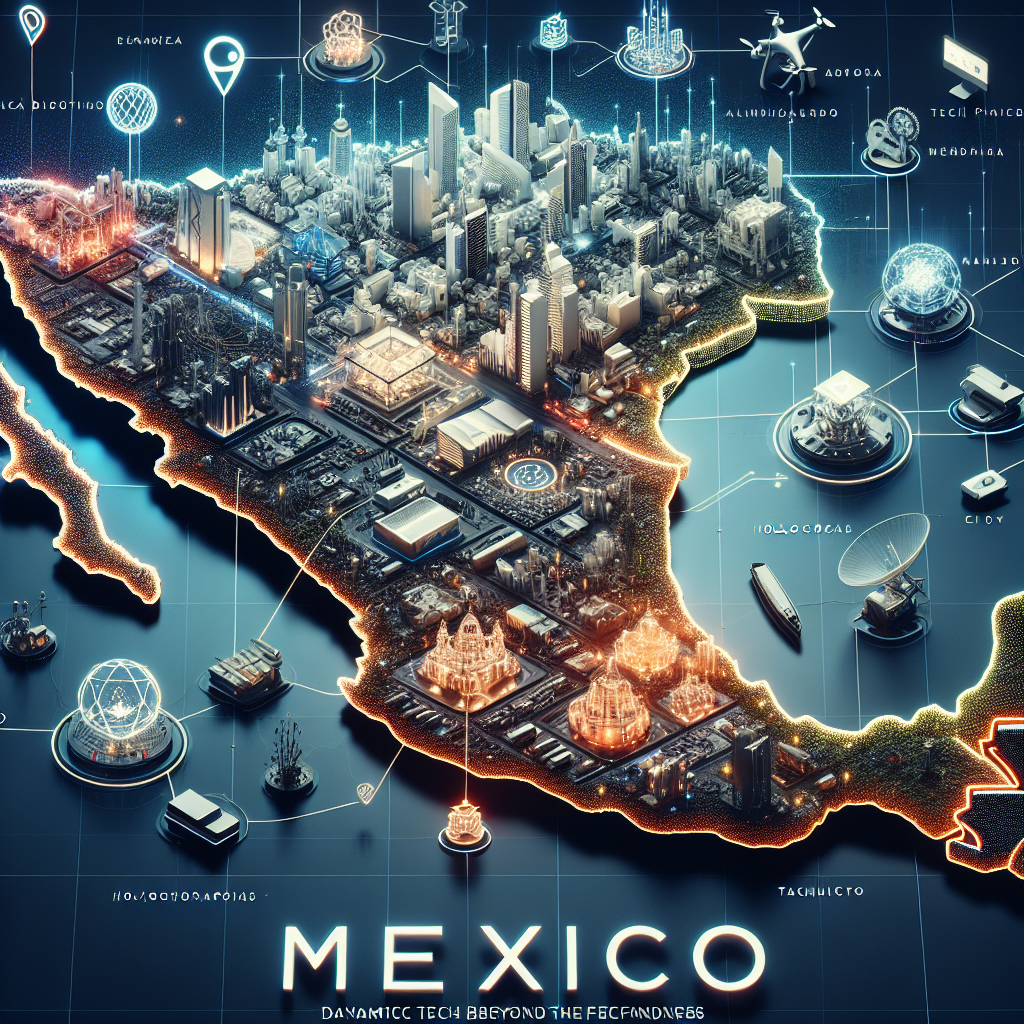
Beyond Mexico City: How Regional Tech Hubs Are Quietly Reshaping Mexico’s Startup Map
Mexico’s tech story is no longer just about Mexico City. Regional hubs like Guadalajara, Monterrey, Mérida, Tijuana, Querétaro, and the broader Bajío are building distinct startup identities around deeptech, industrial SaaS, cross‑border innovation, and livability‑driven remote work. This white paper maps how these cities interact with each other and CDMX, why a more polycentric ecosystem is emerging, and what it means for founders, investors, and policymakers.

Abstract
For more than a decade, international coverage of Mexican tech has largely equated the ecosystem with Mexico City’s fintech and consumer platforms. That picture is now incomplete. A more polycentric innovation map is emerging as regional hubs such as Guadalajara, Monterrey, Tijuana, Mérida, Querétaro, León and the broader Bajío industrial belt develop distinct startup identities. Guadalajara leverages its long‑standing electronics and IT base to push into deeptech and creative software [1][4]. Monterrey is becoming a laboratory for industrial SaaS and nearshoring infrastructure [2][7]. Border cities like Tijuana and Mexicali function as cross‑border innovation labs [3]. Mérida and the Southeast are attracting remote‑first founders with quality of life and climate‑related opportunities [4]. The Bajío is translating its aerospace and automotive clusters into industrial IoT and robotics startups [5].
This white paper synthesizes recent research to explain how and why these hubs are gaining momentum, how they interact with Mexico City rather than simply competing with it, and what this distributed model means for opportunity discovery. It argues that Mexico’s regionalization can make the ecosystem more resilient, better aligned with real‑economy strengths, and more inclusive – provided capital, policy, and talent flows adapt accordingly.
Background
For much of the 2010s, the shorthand “Mexican startup ecosystem” effectively meant Mexico City. The capital concentrated national regulators, corporate headquarters, mainstream media, and the bulk of early venture capital funds. As of 2024, Mexico City is recognized as Latin America’s largest digital talent hub, with nearly 300,000 tech professionals, surpassing São Paulo [6]. This agglomeration, coupled with a dense network of co‑working spaces, accelerators, and events, made CDMX the natural launchpad for consumer‑facing fintech, mobility, and marketplace plays.
This dominance was also self‑reinforcing. Most national and international VC firms based their Mexican partners in the capital. The bulk of high‑visibility startup successes, especially in fintech and e‑commerce, chose to maintain headquarters there, even when their operations spanned the country. By 2024, Mexico City had also established itself as a leading agtech hub in Latin America, with startups raising around US$600 million for tech‑enabled agriculture and food systems [8]. These figures cemented the perception that, if you wanted to build or back a Mexican startup, you had to be in CDMX.
Yet this narrative obscures important dynamics. Long before the term “ecosystem” became fashionable, Guadalajara was a major electronics manufacturing and IT outsourcing center that attracted global tech companies like Intel, HP, Oracle, and IBM [1]. Monterrey’s industrial conglomerates and engineering universities were driving process innovation and corporate R&D [2][9]. The Bajío region was rapidly assembling one of Latin America’s densest automotive and aerospace corridors [5]. These regional economies were already rich with technical talent, industrial know‑how, and supply‑chain sophistication – but much of that innovation was hidden inside factories, labs, and corporate IT departments rather than visible in VC portfolios.
In the past five to seven years, several forces have converged to bring these capabilities into the startup domain. The United States–Mexico–Canada Agreement (USMCA) and the broader nearshoring wave have pushed global manufacturers and service firms to treat Mexico as a strategic technology and operations hub, not just a low‑cost production site [7]. Multinationals have opened or expanded engineering centers outside Mexico City, while local universities have strengthened industry partnerships and entrepreneurship programs [1][10]. Remote work has made it easier for founders to live and build outside the capital without losing access to customers or capital.
As a result, Mexico’s startup geography is evolving from a single‑center model to a distributed network of specialized hubs. CDMX remains a crucial anchor, especially for finance, regulation, and national media. But understanding “Mexican tech” today requires a map that includes Guadalajara’s deeptech culture, Monterrey’s industrial SaaS experiments, the binational border corridor, Mérida’s livability‑driven remote ecosystems, and the Bajío’s aerospace and automotive clusters, among others.
Methods
This white paper synthesizes secondary research and ecosystem analyses published between roughly 2018 and 2025. The core evidence base consists of:
First, international and regional ecosystem reports that quantify talent pools, sector concentrations, and investment flows. For example, Startup Genome’s 2024 profile of Mexico City’s agtech ecosystem provides investment and sector data [8], while media and research outlets have documented Mexico City’s rise to nearly 300,000 tech professionals by 2024 [6]. These sources offer directional statistics and sectoral breakdowns.
Second, city‑ and region‑specific analyses highlight structural advantages. Reports on Guadalajara’s evolution into a “Silicon Valley of Mexico” note that the metro area hosts more than 650 tech companies and roughly 100,000 local tech jobs, accounting for about 40% of Mexico’s IT industry [4]. Studies of Monterrey emphasize foreign direct investment and initiatives such as the 172‑acre Research & Innovation Technology Park (PIIT), which co‑locates corporate labs, university research centers, and incubators [9]. Documentation on the Querétaro Aerospace Cluster and Bajío industrial belt explains how policy, clusters, and lab infrastructure support aerospace and automotive innovation [5][10].
Third, cross‑regional analyses of Mexico’s talent landscape, nearshoring dynamics, and sector specialization provide comparative context. Sources such as nearshore advisory reports and talent market studies help position Tijuana and the border corridor, León, and Mérida within national and international value chains [3][7][11].
The paper combines these quantitative indicators with qualitative interpretation. Where robust, recent data exist, they are cited explicitly with year and source. Where information is sparser, the analysis relies on patterns derived from multiple consistent sources, clearly flagged as qualitative inference rather than precise measurement. No primary surveys or proprietary datasets were used; instead, emphasis is placed on triangulating public information for a coherent, causally structured narrative.
Key Findings
Guadalajara: From Electronics Platform to Deeptech and Creative Tech
Guadalajara’s evolution illustrates how an industrial base can seed a startup culture once conditions ripen. Beginning in the late 20th century, the city became a major node for electronics manufacturing and IT outsourcing, attracting global firms like Intel, HP, Oracle, and IBM that established development and R&D centers [1]. This corporate presence created a dense pool of software engineers, hardware specialists, and systems architects, reinforced by universities such as the University of Guadalajara and Tecnológico de Monterrey’s local campus [1][4]. By the mid‑2020s, the metro area was home to more than 650 tech companies and roughly 100,000 tech jobs, representing about 40% of Mexico’s IT industry [4].
What has changed in recent years is how this capability translates into startups. Rather than primarily delivering outsourced services, Guadalajara teams are increasingly building products at the intersection of hardware and software: industrial IoT solutions, AI‑enabled manufacturing optimization, embedded systems, and specialized automation platforms. The presence of electronics plants and advanced manufacturing lines provides real‑world testbeds. A typical founder journey might start as a process engineer inside a multinational factory, where pain points around machine downtime or quality control are acute, and then spin out with a cloud‑connected monitoring or predictive maintenance product.
Alongside deeptech, creative industries are emerging as a second pillar. The same design and UX capabilities honed in corporate R&D now feed gaming studios, creative SaaS products, and media‑tech startups. Global tech giants beyond the original hardware cohort – including large consumer internet platforms – have opened operations in the city, reinforcing a product‑centric mindset [4]. Public initiatives in Jalisco, coordinated by the State Science and Technology Council, have aimed to strengthen university‑industry links and provide R&D funding, especially in electronics [10]. While resource constraints have limited full implementation, these policies have helped normalize collaboration between labs, startups, and corporate partners.
The net effect is that Guadalajara is becoming Mexico’s go‑to hub for complex engineering problems that blend hardware, firmware, and cloud infrastructure. For deeptech and creative tech founders, this offers a rare combination: local mentors who have shipped complex systems at scale, access to industrial users, and a growing community of product‑driven peers.
Monterrey: Industrial Tech, B2B SaaS, and Nearshoring Testbed
Monterrey’s startup profile is shaped by its long history as Mexico’s industrial powerhouse. Home to conglomerates in cement, steel, and manufacturing, and strategically located near the U.S. border, the city has long maintained cross‑border supply chains and business networks [2]. Its universities, such as Tecnológico de Monterrey’s flagship campus, supply a steady stream of engineers and business graduates who are comfortable operating at the intersection of production and management.
This industrial fabric is now intersecting with a nearshoring wave that is redirecting global supply chains toward North America. By 2025, large foreign projects – including Tesla’s announced multi‑billion‑dollar gigafactory – have highlighted Monterrey’s appeal as an advanced manufacturing and logistics hub [6][7]. The city hosts the 172‑acre Research & Innovation Technology Park (PIIT), located near the airport, which integrates laboratories from universities, corporate R&D units, incubators, and national labs [9]. Companies such as Motorola, PepsiCo, and Bosch maintain operations there, providing an environment where startups can co‑develop and pilot industrial technologies.
Unsurprisingly, B2B SaaS and industrial tech dominate Monterrey’s emerging startup scene. Founders focus on logistics optimization, fleet monitoring, supply‑chain traceability, predictive maintenance, and manufacturing execution software. Many solutions align directly with Industry 4.0 needs in automotive, aerospace, appliances, and heavy industry [7]. Traditional conglomerates are beginning to launch corporate venture programs and innovation challenges, offering both capital and first customers [7][9].
Monterrey is also fertile ground for proptech tied to industrial parks, energy‑management solutions for factories, and fintech targeting SMEs embedded in supply chains [2]. For example, a founder might emerge from a mid‑tier supplier that struggles with working capital due to long payment cycles. Armed with operational insight and relationships with anchor corporations, they can build fintech products that structure receivables financing around actual production flows.
Tijuana and the Border Corridor: Cross‑Border Innovation Lab
Tijuana, together with Mexicali and Ciudad Juárez, sits in a unique cross‑border corridor that blurs the line between Mexican and U.S. tech ecosystems. Physically adjacent to Southern California and the broader U.S. Southwest, these cities combine Mexican cost structures and talent with close access to American markets and investors. Reports on nearshore software hubs highlight Tijuana in particular as a hotspot for binational engineering teams and service providers [3].
Historically, the region developed strength in maquiladora manufacturing, especially in electronics and medical devices. Over time, this industrial focus has evolved into a hybrid startup profile: hardware‑heavy ventures, medical device design and testing, and applied cybersecurity. A notable pattern is Mexican engineers working remotely for U.S. startups while residing in Tijuana or Mexicali, then spinning out their own companies with U.S. clients already in hand [3]. The ability to physically cross the border for sales meetings or investor pitches gives these founders an advantage over peers farther inland.
The border’s cultural dynamics also shape startup DNA. Many teams are bicultural and bilingual, accustomed to navigating two regulatory regimes and consumer cultures. This makes them well‑suited for cross‑border marketplaces, compliance tools, or telehealth platforms designed for Hispanic populations in the U.S. and Mexico alike. Creative industries – from gaming studios to digital agencies – further benefit from the proximity to California’s media ecosystem while tapping Mexican design and engineering talent.
Mérida and the Southeast: Livability, Remote‑First, and Climate‑Adjacent Niches
Mérida, capital of Yucatán, illustrates how quality of life can anchor an emerging tech hub. Widely recognized for its safety and relatively high quality of urban life by Mexican standards, Mérida has become a magnet for remote workers, founders, and distributed teams, especially since the acceleration of remote work in the early 2020s [4]. A 2025 regional employment analysis notes that the Southeast is increasingly attractive for professionals seeking lower living costs and a more relaxed lifestyle while working for national or international employers [4].
Rather than re‑creating a dense corporate cluster, Mérida’s startup ecosystem leans remote‑first. Many founders base themselves there for lifestyle reasons but build products for national or global markets, often with fully distributed teams. Emerging strengths include creative tech, healthtech linked to regional healthcare providers, and tourism and experience platforms leveraging the Yucatán Peninsula’s role as a major tourism destination [4]. Coastal and environmental challenges – such as erosion, hurricanes, and water management – are also catalyzing climate‑related startups in areas like sustainable tourism, coastal monitoring, and agritech tailored to tropical agriculture.
Being far from CDMX and the main industrial belts presents real challenges. Angel and seed capital are thinner, and physical meetings with major investors require more travel. Yet this distance can also be a strategic advantage. Lower operating costs extend runway, and the relative absence of a dominant corporate culture allows for experimentation in organizational models. Some founders use a hybrid strategy: registering a business presence in CDMX or Guadalajara for investor credibility and customer proximity while basing product and operation teams in Mérida.
Querétaro, León, and the Bajío: Aerospace, Automotive, and Data Infrastructure
The Bajío region – spanning Querétaro, León, Aguascalientes, and San Luis Potosí – has become one of Mexico’s most dynamic industrial belts, especially in automotive and aerospace [5][11]. Querétaro hosts the country’s fastest‑growing aerospace hub, the Querétaro Aerospace Cluster, which by the late 2010s encompassed more than 80 companies and institutions [5]. Supported by national agencies like CONACYT and state policies, the cluster benefits from specialized labs such as the Laboratory for Testing and Aeronautical Technology (LABTA), which evaluates the durability of aircraft components [5].
This dense industrial base is now spilling into startup formation. Many young companies in the Bajío stem from engineering consultancies, tier‑2 suppliers, or university research groups. Their products often sit squarely in industrial IoT, robotics, AI‑based quality control, automation, and energy‑management systems for plants [5][11]. León’s rise in high‑tech manufacturing for automotive and aerospace has intensified the demand for specialized technical skills and created opportunities for software and hardware tools that streamline production and workforce management [11].
The region is also emerging as a data and infrastructure node. Querétaro, in particular, has attracted growing interest as a data center location due to its central geography, industrial power grid, and relative climate advantages compared with more congested cities. While still early, this trend supports local cloud‑infrastructure and cybersecurity startups that can service both regional manufacturers and remote clients.
Summary Table: Specializations Across Major Hubs
| Hub/Region | Core Strengths (2020s) | Structural Enablers |
|---|---|---|
| Mexico City (CDMX) | Fintech, B2C platforms, agtech, marketplaces [6][8] | Largest digital talent pool (~300k tech workers, 2024); regulators; VC concentration [6][8] |
| Guadalajara | Deeptech, hardware–software, creative SaaS, gaming [1][4] | 650+ tech firms; ~100k tech jobs; global R&D centers; strong STEM universities [1][4] |
| Monterrey | Industrial SaaS, logistics tech, manufacturing automation, SME fintech [2][7][9] | Industrial conglomerates; nearshoring; PIIT park; strong engineering universities [2][7][9] |
| Tijuana/Border | Medical devices, hardware, cybersecurity, binational services [3] | Cross‑border commuting; U.S. proximity; bilingual workforce [3] |
| Mérida/Southeast | Remote‑first startups, creative tech, tourism, climate‑related tools [4] | High livability; lower costs; growing remote worker inflows [4] |
| Querétaro/Bajío | Aerospace, automotive tech, industrial IoT, robotics, data infrastructure [5][11] | Aerospace cluster; LABTA lab; manufacturing plants; specialized workforce [5][10][11] |
Comparative Analysis: How Regional Hubs Differ from Mexico City
Capital: VC Gravity vs. Regional Angels and Corporate Money
Mexico City remains the gravitational center for venture capital. Most national VC funds and international firms with a Mexican presence run their operations from CDMX, close to regulators, corporate headquarters, and media [6][8]. The city’s large and diversified startup base – including high‑growth fintech, e‑commerce, and agtech firms that collectively raised roughly US$600 million in 2024 alone in agtech [8] – offers VCs a critical mass of deal flow. This concentration creates network efficiencies but also reinforces a bias toward sectors and models that make sense from the capital’s vantage point.
Regional hubs, by contrast, rely more heavily on a mix of angel investors, family offices, and corporate capital. In Monterrey and the Bajío, traditional industrial families and corporate innovation programs provide seed funding, pilot projects, and sometimes strategic investments for B2B startups [2][7][9]. Guadalajara benefits from corporate R&D centers and local government programs that underwrite early R&D, even when pure VC is less abundant [1][10]. Mérida and the Southeast typically see smaller checks from local entrepreneurs or investors diversifying out of tourism and real estate [4].
This has two implications. First, sector bias: CDMX capital favors scalable fintech and B2C platforms, while regional capital naturally gravitates to industrial tech, logistics, and applied engineering aligned with local economies. Second, growth paths: many regional founders still “graduate” to CDMX or foreign investors for later‑stage rounds. The lack of local late‑stage capital remains a structural bottleneck, but as industrial and cross‑border success stories emerge, corporate and international funds are more willing to invest directly in regional hubs.
Talent: Engineering Density vs. Digital Generalists
Mexico City’s label as Latin America’s largest digital talent hub – with nearly 300,000 tech professionals as of 2024 [6] – reflects breadth and diversity. The capital offers not only developers and data scientists but also growth marketers, product managers, compliance experts, and operators with experience scaling B2C platforms. For consumer fintech and national marketplaces, this mix is hard to match elsewhere.
Regional hubs, however, often punch above their weight in specialized technical talent. Guadalajara’s base of 100,000 tech workers and concentration of IT firms yields dense communities around embedded systems, cloud architecture, and AI/ML for industrial use cases [1][4]. Monterrey and the Bajío produce engineers who are deeply familiar with plant operations, industrial automation, and supply‑chain planning [2][5][11]. The border corridor has a distinctive bicultural, bilingual workforce accustomed to working with U.S. clients [3]. Mérida attracts remote‑first knowledge workers, including designers, developers, and content professionals seeking quality of life [4].
As remote work normalizes, startups tap talent across these regions. A hardware‑heavy startup may base its engineering in Guadalajara, a logistics SaaS founder might build the core team in Monterrey, while hiring growth and compliance talent in CDMX. This distributed hiring can be a competitive advantage, but it also requires more mature management and asynchronous collaboration capabilities, which not all early‑stage teams have.
Sector Focus and Business Models
The sectoral contrast between CDMX and regional hubs is stark. Mexico City’s startup scene tilts toward fintech, B2C marketplaces, and SaaS that target national‑scale professional segments, such as agtech platforms like Verqor or Agrofy [8]. Regulatory proximity and financial institution headquarters give fintech founders particular advantages, from licensing to partnership building.
Outside the capital, most ecosystems are structurally oriented toward B2B and industrial tech. Guadalajara leverages its electronics and IT legacy for deeptech and creative software [1][4]. Monterrey and the Bajío build industrial SaaS, IoT, and robotics closely tied to factories and logistics networks [2][5][7]. Tijuana and the border corridor focus on cross‑border services, medical devices, and cybersecurity [3]. Mérida and the Southeast skew toward tourism, creative industries, and climate‑adjacent niches [4]. For founders in these regions, local customer proximity and domain expertise can matter more than physical proximity to regulators.
Cost Structures, Lifestyle, and Strategic Trade‑offs
Cost and lifestyle dynamics further differentiate hubs. Mexico City offers unmatched network density, but it is also one of the country’s most expensive cities for housing and office space. Salaries for senior tech talent reflect intense competition among startups, corporates, and international remote employers [6]. For early‑stage founders, this can burn runway quickly.
By contrast, Guadalajara, Monterrey (to a lesser extent), Mérida, and Bajío cities offer lower living costs and often better quality‑of‑life trade‑offs. Mérida stands out for safety and relaxed pace, making it particularly attractive for remote‑first founders and distributed teams [4]. Lower salary expectations outside the capital extend runways and allow startups to invest more in R&D or market expansion. However, the trade‑off is thinner local markets for advanced startup roles, fewer specialized service providers, and less spontaneous serendipity than in CDMX.
Strategically, “being outside CDMX” is not merely a disadvantage. For industrial SaaS, deeptech, or cross‑border products, regional hubs offer superior customer access, test environments, and specialized talent. The emerging pattern is hybrid: many companies keep a commercial or investor‑facing presence in CDMX while locating core operations, engineering, or R&D in regional cities.
Table: Selected Comparative Metrics (Approximate, 2024–2025)
| Dimension | Mexico City | Guadalajara | Monterrey | Bajío (Querétaro/León) | Mérida/Southeast |
|---|---|---|---|---|---|
| Tech professionals [6][4][11] | ~300,000 | ~100,000 | Tens of thousands (est.) | Tens of thousands (est.) | Growing but smaller (est.) |
| Dominant sectors | Fintech, agtech, B2C | Deeptech, IT, creative SaaS | Industrial SaaS, logistics | Automotive, aerospace, IIoT | Tourism, creative, climate |
| Capital access | High VC density | Mixed VC & corporate | Corporate & FDI‑driven | Corporate & cluster‑linked | Mostly angels & small funds |
| Cost of living (relative) | Highest | High‑moderate | High‑moderate | Moderate | Moderate‑low |
(“Est.” indicates qualitative estimates based on available regional talent studies rather than precise counts.)
Case Studies
Case 1: Guadalajara Engineer to Deeptech Founder
Consider a hypothetical but representative trajectory in Guadalajara. A mechatronics engineer graduates from the University of Guadalajara and joins a global electronics firm’s local R&D center [1]. Over seven years, she works on firmware for industrial controllers deployed in factories across Mexico and Latin America. Daily exposure to plant‑level problems – unplanned downtime, lack of data on equipment health, and manual quality checks – gives her a granular view of pain points that generic SaaS tools cannot solve.
In 2023, she joins a local accelerator that encourages employees of large tech firms to spin out ventures. Leveraging relationships with two local manufacturers, she prototypes an AI‑driven monitoring system that plugs directly into legacy PLCs and streams data to a cloud dashboard. Guadalajara’s ecosystem allows her to assemble a founding team of a cloud architect from another multinational and a UX designer from a local gaming studio [1][4]. Early pilots take place in a tech park jointly supported by the state’s science and technology council [10].
To raise capital, the team initially taps local angels and a corporate partner, then later travels to CDMX for a seed round, highlighting active pilots and international expansion potential. The result is a company whose core technological edge and first customers are deeply rooted in Guadalajara’s industrial and engineering culture, even as growth financing flows from the capital and beyond.
Case 2: Monterrey Logistics Insider to Nearshoring SaaS
In Monterrey, a supply‑chain manager at a mid‑sized automotive supplier has spent a decade navigating just‑in‑time delivery for clients in the U.S. and Mexico [2]. He battles daily with fragmented information systems, customs bottlenecks, and manual processes. When nearshoring accelerates around 2022–2024, his company struggles to handle new orders without proportionally increasing headcount.
Spotting an opportunity, he teams up with a software engineer from a PIIT‑based lab [9] to launch a SaaS platform that centralizes shipment tracking, customs documentation, and plant capacity planning. The first pilot involves a handful of local suppliers and a large OEM willing to co‑design features. Corporate innovation funds and a regional family office provide the first checks, valuing the founders’ deep understanding of cross‑border logistics [7][9].
Within two years, the startup supports multiple industrial parks and partners with a U.S. brokerage to offer end‑to‑end visibility to American clients. When they finally approach CDMX and U.S. VCs for a Series A, they present not just software but integrated relationships with the nearshoring value chain. Monterrey’s industrial gravity – not its startup brand – was the decisive enabler.
Case 3: Mérida Remote‑First Healthtech
A physician from Mexico City relocates to Mérida in 2021, seeking a safer and less hectic environment for his family [4]. Continuing to practice part‑time, he notices gaps in chronic disease management among rural and semi‑urban patients in the Yucatán Peninsula, where travel to specialists is costly and time‑consuming. Partnering with a Mérida‑based software developer who works remotely for a European firm, they build a telehealth platform focused on diabetes and hypertension monitoring.
Mérida’s lower costs allow the small team to operate lean, and they recruit remote nurses from across the Southeast. Initial funding comes from local angels who made their fortunes in tourism and real estate, intrigued by digital health’s scalability [4]. For regulatory and insurer partnerships, the founders regularly travel to CDMX, where they eventually open a small representative office. The engineering and patient‑support operations, however, remain in Mérida, where staff retention is high and salaries are sustainable.
This pattern underscores a broader model: livability‑driven hubs like Mérida can house core teams for national‑scale startups, even when key institutional relationships are concentrated elsewhere.
Limitations
Several limitations temper the conclusions of this analysis. First, reliable, disaggregated data on startup activity, funding, and sector specialization by Mexican city are still patchy. While figures such as Mexico City’s ~300,000 tech workers [6] or Guadalajara’s 650+ tech companies and 100,000 jobs [4] provide anchors, comparable metrics for Monterrey, Tijuana, Mérida, and many Bajío cities are often qualitative or estimated. This constrains the precision of cross‑regional comparisons and forces reliance on directional patterns rather than exact rankings.
Second, much of the available research and media coverage naturally gravitates toward more visible hubs – CDMX, Guadalajara, and Monterrey. Emerging ecosystems like Mérida or specific border cities receive less systematic attention, even though anecdotal evidence suggests rapid evolution. As a result, this paper may understate the dynamism of less‑documented hubs or niche verticals.
Third, startup ecosystems are volatile. Investment cycles, regulatory shifts, and macroeconomic conditions can alter trajectories quickly. For example, nearshoring has been a powerful driver of industrial and logistics tech in Monterrey and the Bajío [2][7][11], but its pace could slow due to political changes or supply‑chain realignments. Similarly, the sustainability of remote‑first ecosystems like Mérida depends on broader trends in remote work and digital nomad policies.
Lastly, the analysis draws heavily on public sources, which may blend rigorous data with promotional narratives. Initiatives like PIIT, the Querétaro Aerospace Cluster, or state‑level innovation councils are often showcased as success stories [5][9][10]; independent evaluations of impact are rarer. While this paper attempts to triangulate claims and avoid boosterism, some bias toward highlighting positive outcomes is likely.
Implications
The rise of regional hubs has several important implications for Mexico’s overall tech trajectory. First, a distributed ecosystem is structurally more resilient than a single‑city model. Concentrating most startups and investors in one metropolis exposes the ecosystem to localized shocks, whether regulatory, infrastructural, or political. By comparison, a network that spans CDMX, Guadalajara, Monterrey, the border, the Bajío, and the Southeast diffuses risk. For instance, industrial or trade disruptions might slow Monterrey, while tourism downturns affect Mérida, but deeptech in Guadalajara or agtech in CDMX could continue to progress [1][2][4][8].
Second, regionalization allows Mexico to more fully leverage its real‑economy strengths. Manufacturing clusters in the Bajío and Monterrey become natural laboratories for Industry 4.0 startups [2][5][7][11]. The tourism and environmental challenges of the Yucatán Peninsula spur climate‑related and experience‑economy innovations [4]. The border’s unique regulatory and cultural environment fosters cross‑border, bilingual products [3]. Rather than attempting to replicate CDMX’s fintech and B2C strengths everywhere, regions can specialize around their comparative advantages, collectively creating a diversified national portfolio.
Third, a polycentric map opens doors for talent historically excluded from the capital‑centric ecosystem. Students at regional universities, engineers in industrial towns, and professionals seeking alternative lifestyles can participate in tech without migrating to CDMX. This inclusiveness is not just socially desirable; it broadens the country’s innovation base at a time when nearshoring, climate adaptation, and digitization of legacy industries demand grounded, domain‑specific knowledge [7].
For international investors and partners, the implication is clear: Mexico’s opportunity surface is larger and more varied than a CDMX‑only lens suggests. Investing time to understand regional strengths, connect with local universities and corporate clusters, and support cross‑city founder journeys can unlock differentiated deal flow and more defensible companies.
Conclusion
Mexico’s startup story is entering a new phase. While Mexico City remains a powerful anchor – home to nearly 300,000 tech professionals and a thriving fintech and agtech scene [6][8] – it no longer defines the entirety of Mexican innovation. Guadalajara has transformed its electronics heritage into a deeptech and creative software engine [1][4]. Monterrey is emerging as a nearshoring‑driven laboratory for industrial SaaS and logistics tech [2][7][9]. The border corridor operates as a cross‑border innovation lab leveraging U.S. proximity [3]. Mérida and the Southeast attract remote‑first founders with livability and climate‑related niches [4], while the Bajío translates aerospace and automotive clusters into industrial IoT and robotics startups [5][11].
These hubs are not isolated rivals to CDMX but interconnected nodes in a national network. Founders study in one city, work in another, and raise capital in the capital or abroad. Capital, talent, and ideas circulate via accelerators, conferences, and increasingly remote‑first companies. The challenge ahead is not to crown a new “Mexican Silicon Valley,” but to intentionally cultivate a polycentric ecosystem where each region deepens its specialization while remaining connected.
For founders, this means thinking strategically about where to base engineering, operations, and go‑to‑market functions, often spanning multiple cities. For investors, it means expanding scouting beyond CDMX and partnering with local institutions. For policymakers and ecosystem builders, it means supporting connectivity – transport, digital infrastructure, and collaborative programs – and reinforcing regional strengths rather than trying to copy the capital. If these actors succeed, Mexico’s distributed innovation map could become one of its greatest competitive advantages in the global tech landscape.
References
[1] Start‑Ops, “A Silicon Valley with lower costs, same time zone,” start-ops.com.mx, accessed 2025, https://start-ops.com.mx/a-silicon-valley-with-lower-costs-same-time-zone/
[2] Brevitas, “Why Mexico Is a Leading Destination for Commercial Real Estate Investors,” 2025, https://brevitas.com/articles/2025/4/why-mexico-is-a-leading-destination-for-commercial-real-estate-investors/
[3] ACLTI, “Top 7 Nearshore Software Hubs in Mexico,” aclti.com, accessed 2025, https://www.aclti.com/en/news-ideas/top-7-nearshore-software-hubs-in-mexico/
[4] Jobstera, “Mexico Regional Employment 2025,” jobstera.com, 2025, https://www.jobstera.com/articles/en/mexico-regional-employment-2025/
[5] Wikipedia, “Querétaro Aerospace Cluster,” accessed 2025, https://en.wikipedia.org/wiki/Quer%C3%A9taro_Aerospace_Cluster
[6] The Rio Times, “Mexico City Overtakes São Paulo as Latin America’s Largest Digital Talent Hub,” 2024, https://www.riotimesonline.com/mexico-city-overtakes-sao-paulo-as-latin-americas-largest-digital-talent-hub/
[7] Zinnov, “Why Mexico Is the Next Big Nearshoring Hub for North America,” zinnov.com, accessed 2025, https://zinnov.com/centers-of-excellence/why-mexico-is-the-next-big-nearshoring-hub-for-north-america-blog/
[8] Startup Genome, “Mexico City Ecosystem: Agtech Hub Profile,” 2024, https://startupgenome.com/ecosystems/mexico-city
[9] National Academies Press (NCBI Bookshelf), “The Research & Innovation Technology Park of Nuevo León,” in Models of Innovation: Lessons from Mexico, accessed 2025, https://www.ncbi.nlm.nih.gov/books/NBK100322/
[10] Padilla et al., “Innovation and Policy in Jalisco’s Electronics Industry,” in Learning from Innovation in Developing Countries, 2010, https://cristinachaminade.com/wp-content/uploads/2018/07/chapter-6-padilla-et-al-published-r.pdf
[11] Hudson Talent, “Understanding Mexico’s Diverse Talent Landscape,” hudsontalent.com, accessed 2025, https://hudsontalent.com/understanding-mexicos-diverse-talent-landscape/
Related Articles

Who Stole the Value? A Forensic Audit of Giants, Startups, and the Customer Left Out of the Deal
Treating today’s innovation economy as a crime scene, this essay investigates what quietly disappears when incumbents and startups reshape finance, health, retail, mobility, education, and climate tech. Beyond pitch decks and marble lobbies, who actually captures the value—and at what human cost?

The Year We Misread the Checkbox: How a Single UX Choice Rewired Giants and Startups
Writing from 2050, a radical futurist looks back on 2024 and argues that the true battle between traditional industries and startups in banking, retail, health, and mobility never took place in boardrooms or pitch decks, but inside a single, tiny UX artifact: the checkbox. By following that microscopic element, this manifesto rewrites the history of incumbents vs. startups as a struggle over who controls consent, data, and time.

The scene of the silent crime: where has courage been lost between giants and startups?
A monk‑analyst steps onto the “crime scene” of the digital economy—financial services, retail, healthcare, mobility, education, and manufacturing—to investigate a silent disappearance: the deeper value that customers, workers, and communities expected from the transformation between traditional industry and the startup ecosystem.