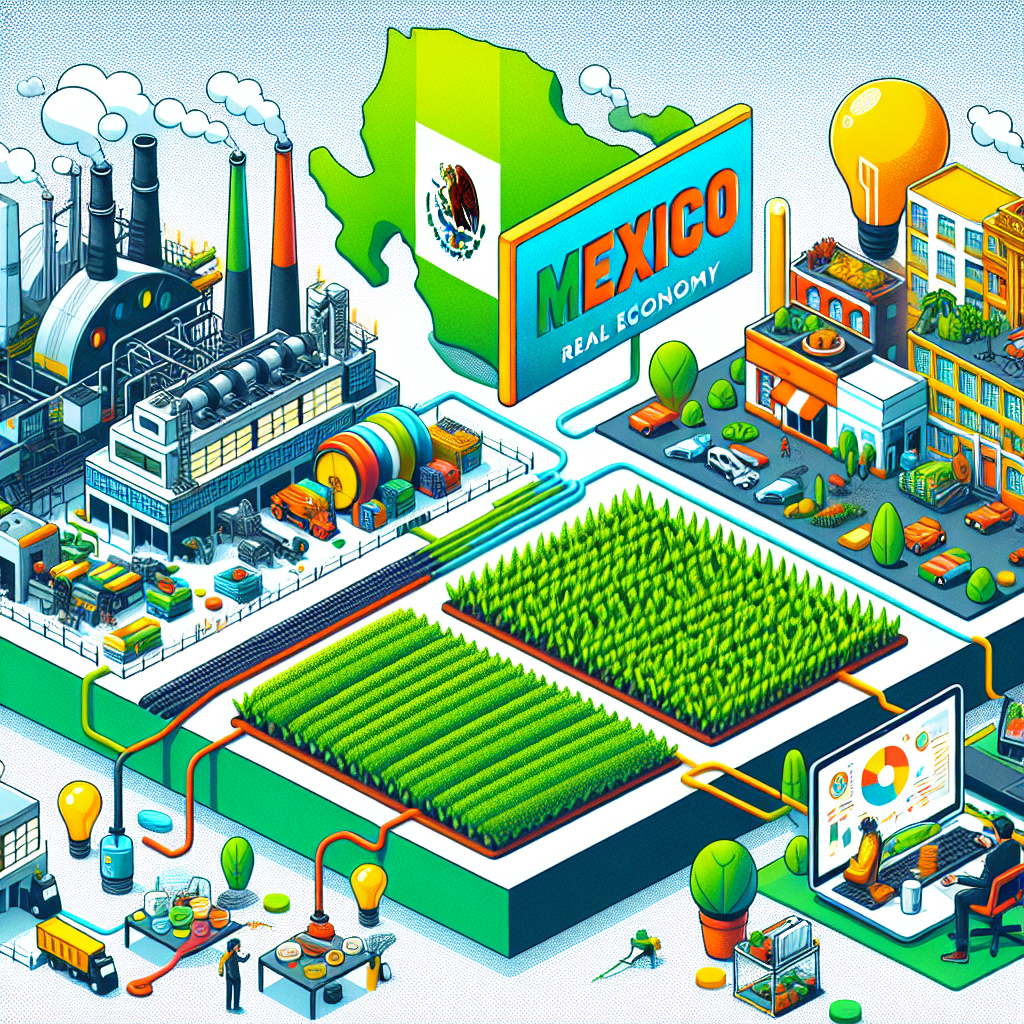
Factories, Farms, and Studios: How Mexico’s Real Economy Is Rewiring Its Startup Ecosystem
Mexico’s most durable tech opportunities are emerging not from neobanks in Mexico City, but from farms, factories, and creative studios. This white paper explains how agriculture, manufacturing, and creative industries are quietly but powerfully shaping Mexico’s startup DNA—and what that means for founders, investors, and policymakers.

Abstract
In a field outside Culiacán, a smallholder farmer adjusts a mobile dashboard linked to low-cost sensors buried in his soil. The system drip-feeds just enough water to keep his tomatoes export-grade, while conserving every scarce liter. This is not a fintech story—and that is precisely the point. Mexico’s startup narrative abroad still centers on neobanks and urban consumer apps, yet some of the most resilient, defensible companies emerging today are rooted in agriculture, manufacturing, logistics, and creative industries.
This white paper argues that Mexico is evolving as a “real economy–first” tech ecosystem, distinct from peers like Brazil or Colombia. With a US$1.86 trillion GDP and deep strengths in manufacturing, agribusiness, and cultural production, Mexico’s structural frictions—water scarcity, fragmented supply chains, export compliance, and content monetization—are giving rise to highly sector-specific innovation [1]. Drawing on secondary research, policy documents, and ecosystem studies, we analyze how non-tech sectors shape startup models, talent pools, and geographic hubs. We then explore implications for international founders, investors, and policymakers seeking to engage with Mexico not as a copy of Silicon Valley, but as a laboratory for tech rooted in the real economy.
Background
Mexico enters the mid-2020s as one of the world’s most diversified upper-middle-income economies. With an estimated GDP of about US$1.86 trillion in 2025, it ranks roughly 13th globally, ahead of many European economies in absolute size [1]. Manufacturing is a central pillar: automotive, electronics, and textiles underpin export performance and anchor dense industrial corridors in northern and central states. These supply chains are deeply integrated with the United States through the USMCA trade agreement, making Mexico a key platform for nearshoring and cross-border production.
Agriculture, often overlooked in tech narratives, remains another cornerstone. Mexico is a major global exporter of high-value fruits and vegetables, notably avocados and berries, supplying North American and European retailers [1]. The sector is structurally dual: millions of smallholder farmers operate alongside sophisticated export agribusinesses. Climate variability, water scarcity, and compliance with stringent US/EU phytosanitary standards create systemic pressure points that are not easily solved with generic software. These conditions set the stage for agtech models that integrate hardware, finance, and risk analytics.
Simultaneously, creative and cultural industries—from film and design to gaming, music, and digital content—have become important urban growth engines. Mexico City and Guadalajara host vibrant communities of designers, animators, writers, and indie developers, supported in part by institutions such as the National System of Art Creators (Sistema Nacional de Creadores de Arte), which has provided grants to artists since 1993 [5]. These creative clusters, connected to global streaming platforms and social networks, generate a different kind of demand for technology tools: those that enable monetization, localization, and brand-rich direct-to-consumer models.
These three pillars—agriculture, manufacturing, and creative industries—are not merely background conditions. They actively shape the country’s startup opportunity set. Instead of a predominantly urban, consumer-finance narrative, Mexico’s tech ecosystem is increasingly about reducing spoilage in cold chains, digitizing plant-floor operations, and helping creators capture value from their audiences. Policy initiatives like the “Harvesting Sovereignty” agricultural program, the Plan México manufacturing incentives, and the new Secretariat for Science, Technology, Humanities, and Innovation further tilt the playing field toward real-economy innovation [3][4][6].
Methods
This white paper synthesizes a curated set of secondary sources and ecosystem analyses to construct a coherent narrative about Mexico’s sector-driven startup dynamics. The core research context draws on quantitative macroeconomic indicators, policy documents, and thematic reports covering agriculture, manufacturing, and creative industries [1–6]. These materials provide statistics on GDP size, sectoral programs, public investment commitments, and institutional arrangements.
We complemented this with ecosystem studies on funding challenges, regulatory environments, and infrastructure gaps affecting Mexican startups, particularly in non-tech sectors [2][7][8]. These documents inform our understanding of capital availability, bureaucratic friction, and the evolution of government support mechanisms, including the closure of INADEM and the emergence of alternative financing such as crowdfunding. Additional sources from universities and multilateral organizations describe how higher-education institutions, accelerators, and research systems contribute to entrepreneurship, including examples from Tecnológico de Monterrey, the Sistema Nacional de Investigadores, and social-enterprise labs [9–12].
Rather than perform a comprehensive market sizing, the analysis focuses on causal links between sector structures and startup archetypes. Where possible, we ground claims in dated, quantitative figures such as program budgets, loan caps, or institutional timelines. We then triangulate across documents to identify consistent patterns: the dual structure of agriculture, the embeddedness of manufacturing in global supply chains, and the role of cultural policy in nurturing creative talent. The result is an interpretive, narrative synthesis intended for practitioners—founders, investors, and policymakers—who already know the basic Latin American tech story but seek a more granular, sector-based understanding of Mexico.
Key Findings
Mexico’s Real Economy as a Tech Demand Engine
One core finding is that Mexico’s global position in manufacturing, agriculture, and cultural production creates enduring, non-speculative demand for technology. With a US$1.86 trillion economy heavily reliant on export-oriented manufacturing, even marginal efficiency gains in factories and logistics can translate into significant value creation [1]. As global firms reconfigure supply chains after the pandemic and amid geopolitical tensions, Mexico’s nearshoring narrative is not just about attracting plants; it is about digitizing and automating them.
Government policy has begun to align with this reality. Plan México, a national strategy to boost production and innovation, introduces tax incentives such as accelerated depreciation for new fixed-asset investments and additional deductions for training and innovation expenses [4]. These incentives are explicitly targeted at sectors like automotive, aeronautics, pharmaceuticals, textiles, and creative industries, signaling that industrial modernization and creative output are priority zones for innovation capital. Similarly, the National Kutsari Semiconductor Design Center, with locations in Puebla, Jalisco, and Sonora, is an industrial-tech initiative that aims to produce patentable semiconductor designs for use in automotive, consumer electronics, and medical devices [5].
A second finding is that Mexico’s startup ecosystem is structurally shaped by public and quasi-public knowledge institutions. The Sistema Nacional de Investigadores (SNI), founded in 1984, improves national research capacity by evaluating and supporting researchers across disciplines [10]. Universities such as Tecnológico de Monterrey drive applied innovation, for instance via the Innovation and Technology Transfer Park in Chihuahua and the EdTech accelerator on its campus [9]. Partnerships like MIT REAP Focus Mexico, involving Tec de Monterrey and the Massachusetts Institute of Technology, explicitly seek to tie regional economic development to science-based entrepreneurship in five Mexican regions [11]. This infrastructure biases the ecosystem toward deep, domain-rich solutions rather than purely opportunistic apps.
Agro and Food Systems: Dual Structures, Climate Risk, and Export Discipline
Mexican agriculture is structurally distinct from that of many Latin American peers because of the tight coupling between smallholder farmers and export-oriented agribusiness. Smallholders, often cultivating a few hectares, face acute exposure to climate shocks and water scarcity. In contrast, large agribusinesses supplying avocados, berries, and other high-value crops to US and EU retailers confront stringent quality, traceability, and phytosanitary standards [1]. Startups emerging in this space must therefore design for a barbell reality: fragmented producers at one end, concentrated buyers at the other.
Precision agriculture and IoT illustrate this duality. In Sinaloa, for example, small farmers deploy low-cost precision irrigation systems that measure soil moisture and weather patterns, allowing them to optimize water and fertilizer use while maintaining crop health [1]. The hardware is often ruggedized, offline-tolerant, and bundled with agronomic advice. Startups in this niche cannot rely on pure software margins; they must integrate sensors, connectivity, and human training. This pushes founders to build hybrid hardware–software stacks, manage inventory and field service, and cultivate trust in communities where digital literacy may be limited. Unlike urban B2C apps targeting smartphone-native consumers, these ventures succeed only if they solve both technical and social adoption challenges.
The financing and risk layer adds further complexity. Because smallholders lack collateral and formal credit histories, digital platforms increasingly embed financial services into market-access solutions. Platforms connecting rural producers directly to buyers may combine order matching with microloans, input financing, or bundled crop insurance [1]. Another set of startups uses satellite imagery and machine learning to model weather risk, offering parametric insurance products that pay out rapidly after predefined events, such as droughts or storms. The value proposition here is not just capital, but predictability in inherently volatile production systems.
Traceability and compliance technologies highlight how Mexico’s export orientation disciplines agtech innovation. Tools that track produce from farm to table, capturing data on inputs, handling, and logistics, help exporters meet US and EU import standards [1]. These products require interoperability with customs systems and retailer procurement platforms, reinforcing a B2B orientation. While the apps themselves may look like standard SaaS dashboards, their success hinges on deep familiarity with sanitary regulations, certification processes, and third-party audits. This is far removed from typical consumer-facing apps and makes sector expertise a non-negotiable founding-team asset.
Manufacturing and Nearshoring: Embedded, Ops-Heavy Innovation
Mexico’s manufacturing corridors—from Nuevo León and Coahuila in the north to Guanajuato and Querétaro in the Bajío—serve as both customers and co-design partners for industrial startups. Global OEMs and tier-1 suppliers in automotive, electronics, and aerospace demand tight tolerances, traceable quality, and strict compliance with corporate and regulatory standards. As a result, tech ventures in this space gravitate toward highly operational, often unglamorous problems: downtime, scrap rates, quality escapes, and inefficient changeovers.
Industrial automation is one visible hotspot. Rather than greenfield, fully robotic plants, the reality in many Mexican factories is a mix of modern CNC machines and decades-old equipment. Startups therefore focus on cost-effective retrofits: adding smart sensors, vision systems, or cobots to existing lines to capture data and incrementally automate processes [1][4]. Because capital expenditures are constrained, solutions must demonstrate quick payback periods and integrate with operators who may have limited digital training. This context produces hybrid teams—mechanical and electrical engineers, manufacturing managers, and software developers—who design for ruggedness, safety, and ROI, not for user growth at any cost.
Software-as-a-service in manufacturing tends to revolve around production planning, quality control, and maintenance. Manufacturing execution systems (MES), predictive-maintenance platforms, and digital twins are common in rich-country plants, but Mexican deployments often need localization to Spanish, offline functionality, and simplified interfaces for mixed-skill workforces. Startups must also integrate with legacy enterprise systems and meet the audit requirements of multinational clients [4]. Sales cycles can be long; pilots may run for months before scaling. Yet once embedded into core plant operations, switching costs are very high, creating defensible, recurring revenue.
Nearshoring amplifies logistics and cross-border trade as arenas for innovation. Custom clearance, freight matching, and regulatory compliance between Mexico and the US are complex and paperwork-heavy. Startups building freight platforms, customs-compliance systems, or end-to-end tracking tools are effectively digitizing a binational operating system. Their competitive edge comes not from generic route optimization algorithms alone, but from a granular understanding of USMCA rules of origin, port and border-crossing dynamics, and the operational cadence of customs brokers [4][8]. As with agtech, deep domain fluency is a prerequisite; the tech is an enabler rather than the primary differentiator.
Creative Industries: Culture-Native Innovation and the “Creative Stack”
Mexico’s creative industries—film, television, music, design, and gaming—have grown alongside global streaming and the rise of the creator economy. Mexico City and Guadalajara, in particular, host dense clusters of designers, animators, writers, musicians, and indie game developers. Public support mechanisms, such as the Sistema Nacional de Creadores de Arte established in 1993, provide grants to artists whose work contributes to national culture, reinforcing creative activity as a legitimate professional path [5].
This creative base gives rise to a distinct set of startup archetypes. Gaming studios build titles explicitly tailored to Spanish-speaking markets, with narrative structures, humor, and aesthetics that resonate with Latin American audiences. Around them emerge “game-tech” tools: localization software to adapt global games into Mexican Spanish, community-management platforms for player bases, and analytics tools tuned to free-to-play monetization patterns common in the region [1]. These ventures blend artistic direction with engineering and data science, and they rely heavily on community-building capabilities that are not as central in, say, industrial SaaS.
The creator-economy layer is equally dynamic. Startups provide platforms for independent musicians, writers, and influencers to monetize through subscriptions, digital goods, merchandise, and direct fan engagement, with payment rails and pricing models adapted to local income levels and preferences [1]. Unlike generic global creator tools, Mexican platforms often handle regional payment instruments, offer Spanish-language support, and account for stronger informality in tax and business structures. At the intersection of design and e-commerce, direct-to-consumer brands leverage Mexican visual identity and domestic manufacturing capabilities, selling everything from fashion to home goods to global audiences. Success in this segment hinges on UX, storytelling, and brand authenticity as much as on logistics.
The net effect is a “creative stack” that rebalances the talent mix within Mexico’s startup ecosystem. Teams often feature strong design, content, and community roles alongside engineering. This can give Mexican startups a comparative advantage in brand-driven consumer products, culturally attuned interfaces, and community-led growth. It also fosters cross-fertilization: designers trained in creative agencies or studios may join SaaS or hardware startups, upgrading the user experience of otherwise utilitarian products.
Structural Challenges and Adaptive Strategies
Despite these strengths, non-tech-sector startups in Mexico face significant obstacles. Access to funding is a primary constraint. Traditional investors tend to be risk-averse, and the closure of the National Institute of Entrepreneurs (INADEM) in 2019 removed a major public support channel [2]. As a result, early-stage capital for industrial, agricultural, or creative ventures—whose timelines and risk profiles differ from fast-scaling fintechs—remains scarce. Entrepreneurs increasingly turn to alternative financing mechanisms, including crowdfunding platforms such as Fondeadora and Kickstarter, to validate demand and raise seed capital directly from consumers [2].
Regulatory complexity and infrastructure gaps further shape startup trajectories. Bureaucratic hurdles around business registration, taxation, and labor compliance are particularly daunting for first-time founders [3]. Programs like Mexico Emprende, designed to provide support and resources for entrepreneurs, seek to simplify the process but have uneven reach [3]. Physical infrastructure outside major hubs also remains a constraint: rural logistics, road conditions, and warehousing capacity can undermine the scalability of agtech and industrial ventures expanding beyond core corridors [8]. Many startups respond by building integrated logistics features into their platforms or partnering with regional operators to ensure service reliability.
Cultural resistance to innovation among traditional SMEs compounds these issues. Many firms remain comfortable with analog processes and skeptical of digital solutions, especially when immediate ROI is not obvious [8]. Startups in agriculture, manufacturing, and creative tools therefore invest heavily in education, training, and proof-of-concept deployments. This makes sales cycles longer but can yield strong loyalty once benefits are internalized. Policy-driven initiatives like SADER’s commitment of over MX$80 billion by 2030 to support small and medium-scale agricultural production—aiming to reach 750,000 producers across 1,184 municipalities—create opportunities for startups aligned with public objectives, such as yield improvement and risk management [3].
Table 1: Selected Sector-Relevant Public Initiatives in Mexico
| Initiative / Institution | Sector Focus | Key Features | Timeframe / Scale |
|---|---|---|---|
| Harvesting Sovereignty (SADER) | Agriculture | Loans up to MXN $1.3M at max 9% interest; supports insurance for guaranteed minimum prices | Up to 2030; part of >MX$80B commitment for small/medium agriculture [3] |
| Plan México | Manufacturing & Creative | Accelerated depreciation for fixed assets; extra deductions for training and innovation | Confirmed in recent tax reforms to attract investment [4] |
| National Kutsari Semiconductor Design Center | Advanced Manufacturing | Semiconductor design for automotive, electronics, medical devices; sites in Puebla, Jalisco, Sonora | Launched mid-2020s, aims at patentable designs [5] |
| Sistema Nacional de Creadores de Arte | Creative Industries | Grants to artists across disciplines; supports cultural production | Established 1993, ongoing [5] |
| Sistema Nacional de Investigadores (SNI) | Cross-sector research | Evaluates and funds researchers to strengthen national R&D | Established 1984, ongoing [10] |
Comparative Analysis
Mexico vs. Brazil and Colombia: Different Engines, Different Apps
Comparing Mexico’s ecosystem with Brazil’s highlights a fundamental difference in demand drivers. Brazil’s enormous internal consumer market has historically favored B2C super-apps, neobanks, and e-commerce platforms targeting tens of millions of domestic users. In Mexico, by contrast, the real-economy backbone of manufacturing and export agriculture means that many of the most compelling opportunities are B2B, infrastructure-like solutions embedded in supply chains and industrial processes [1]. This bias toward “boring but critical” problems leads to companies that scale more slowly but tap into global value chains, not just domestic consumption.
Colombia offers another contrast. Its startup landscape is also rich in fintech and logistics innovations, but its manufacturing base and agricultural export profile are smaller and less integrated with the US market than Mexico’s. Consequently, while Colombian startups have built strong logistics and last-mile delivery solutions for Andean urban contexts, Mexican logistics startups often orient around cross-border compliance, USMCA rules, and multimodal freight servicing US supply chains [4][8]. These contextual differences shape everything from product features to go-to-market strategies.
Intra-Mexican Geography: Beyond Mexico City
Within Mexico, the geography of innovation is far more polycentric than many outsiders assume. Mexico City remains a hub for fintech, media, and creative industries, but industrial and agtech innovation clusters are spread across the country. Monterrey and the surrounding state of Nuevo León align closely with heavy industry and advanced manufacturing, while the Bajío region—Guanajuato, Querétaro, and neighboring states—is defined by automotive and aerospace corridors. Sinaloa and other agricultural states drive agtech experimentation, and Guadalajara has emerged as a key node for creative industries and ICT.
These regional specializations generate distinct startup profiles. Monterrey-based ventures may emerge from corporate manufacturing roles, with founders who are industrial engineers or operations managers translating plant-floor pain points into products. In Guadalajara, startups often sit at the intersection of software, design, and content, benefiting from local creative talent and ICT infrastructure. Chihuahua’s Innovation and Technology Transfer Park and the EdTech accelerator at Tecnológico de Monterrey’s campus exemplify how regional institutions catalyze sector-specific entrepreneurship, particularly in education technology and applied industrial innovation [9]. The result is a mosaic of ecosystems whose strengths map closely onto local industrial structures.
Talent, Business Models, and Risk Profiles
Sectoral structures also shape the composition of startup teams and their risk-return profiles. In Brazil’s consumer-driven ecosystem, product managers, marketers, and UX designers for mass-market apps are central. In Mexico’s agriculture and manufacturing-heavy context, startups often recruit agronomists, industrial engineers, and logistics specialists. University systems and programs like SNI, Tec de Monterrey’s innovation parks, and social-enterprise labs at Anáhuac University and the University of Monterrey create pipelines of technically trained professionals who can move between corporate and startup roles [9][10][12]. This cross-pollination embeds operational rigor into early-stage ventures.
Business models follow suit. B2B and enterprise-like contracts dominate in industrial and agtech startups, with long sales cycles but sticky relationships. Revenue may start as project-based, transitioning into recurring SaaS or managed-service arrangements once trust is built. In creative industries, monetization blends subscription, advertising, and commerce, but still rests heavily on relationship capital and community-building. These models tend to be less compatible with venture investors seeking rapid hockey-stick growth, yet they may prove more resilient across macro cycles, as they address mission-critical needs in supply chains, food systems, and cultural production [2][8].
Table 2: Stylized Comparison of Ecosystem Profiles
| Dimension | Mexico | Brazil | Colombia |
|---|---|---|---|
| Primary demand driver | Export manufacturing, agribusiness, creative industries [1] | Large domestic consumer market | Services, logistics, fintech |
| Dominant startup orientation | B2B, industrial/infra, agtech, creator-tools | B2C fintech, super-apps, marketplaces | Fintech, logistics, productivity tools |
| Key sectoral talent | Industrial engineers, agronomists, creatives [1][9][10] | Consumer product/marketing specialists | Logistics, financial services professionals |
| Geographic structure | Polycentric (Monterrey, GDL, Bajío, CDMX, ag hubs) | Strong concentration in São Paulo, Rio | Concentrated in Bogotá, Medellín |
| Typical growth profile | Slower, embedded, highly sticky | Faster user scaling, higher churn risk | Mixed, with emphasis on efficiency |
Case Studies
Case 1: Precision Irrigation for Export-Grade Tomatoes
In Sinaloa, a founder with an agronomy background launched a startup offering low-cost precision-irrigation kits to smallholder vegetable farmers. Each kit includes soil-moisture sensors, a simple gateway, and a mobile app that functions offline, synchronizing data when connectivity resumes. The technology allows farmers to apply water and fertilizer only when necessary, improving yield and quality to meet export standards while reducing input costs.
The company’s business model evolved from hardware sales to a service subscription covering maintenance, agronomic advice, and data analytics. Adoption initially faced skepticism; many farmers were wary of digital tools and fearful of equipment failure during critical growth phases. To overcome this, the startup partnered with local cooperatives and leveraged the government’s Harvesting Sovereignty program, which offers loans up to MXN $1.3 million at a maximum annual interest rate of 9% and supports insurance for guaranteed minimum prices [3]. These instruments made it easier for farmers to invest in systems that promised higher-value export contracts. Today, the startup is less visible than urban consumer apps, but its technology is deeply woven into local production systems.
Case 2: Retrofitting a Tier-1 Automotive Supplier
In the Bajío region, an industrial engineer who previously managed operations at a tier-1 automotive supplier co-founded a startup focused on retrofitting legacy equipment with IoT sensors and analytics software. The target customers were plants struggling with unplanned downtime and quality escapes, issues that directly threatened their contracts with global OEMs. The startup’s offering integrated vibration and temperature sensors with a predictive-maintenance platform localized to Spanish and designed for technicians with varying digital literacy.
Sales cycles were long: pilots ran for six to twelve months before plants committed to wider rollouts. However, once a line was instrumented and the system proved it could cut downtime by double-digit percentages, the solution became difficult to displace. Plan México’s accelerated depreciation for new investments in fixed assets, including automation upgrades, helped customers justify capital expenditure [4]. By embedding itself into production workflows and maintenance routines, the startup built defensible, recurring revenue while contributing directly to Mexico’s competitiveness as a nearshoring destination.
Case 3: A Creator Platform Rooted in Mexican Culture
In Mexico City, a team of designers, developers, and former music-industry professionals launched a platform that enables independent musicians and content creators to monetize directly from fans. The product supports tiered subscriptions, virtual events, and merchandise sales, with payment rails adapted to Mexican and broader Latin American preferences, including local cards and cash-based methods.
Rather than compete head-on with global platforms, the startup differentiated through deep cultural localization. It offered guidance on branding and storytelling grounded in Mexican aesthetics, and it partnered with recipients of grants from the Sistema Nacional de Creadores de Arte to pilot tools for fan engagement [5]. Over time, it added analytics that helped creators benchmark earnings and audience engagement patterns across Spanish-speaking markets. While not yet a unicorn, the company sits at the intersection of culture and technology, illustrating how creative industries can generate sticky, scalable digital products with strong brand resonance.
Limitations
This analysis is constrained primarily by its reliance on secondary sources and illustrative cases rather than comprehensive, primary data collection. Many of the statistics cited—such as Mexico’s GDP level, public-investment commitments, and program designs—are drawn from policy documents and ecosystem studies that may lag actual implementation or be subject to political change [1–6]. For example, the MX$80 billion agricultural support commitment through 2030 reflects a policy trajectory at the time of writing, but budgetary reallocations or administrative shifts could alter the effective scope of these programs [3].
Moreover, the case studies presented are stylized composites based on patterns observed in the literature rather than detailed, named company profiles. While they aim to capture representative dynamics in agtech, industrial retrofitting, and creative-economy platforms, they do not substitute for firm-level financial or operational data. Funding statistics for Mexican startups, especially in non-tech sectors, are also less systematically reported than for more visible fintech ventures, making it difficult to quantify precisely the relative weight of “real economy–first” startups in overall investment flows.
Finally, comparisons with Brazil and Colombia rest on high-level ecosystem characteristics rather than granular, sector-by-sector benchmarking. A rigorous comparative study would require harmonized datasets on firm formation, sectoral FDI, and innovation outcomes across countries. Nonetheless, the patterns identified—B2B orientation, talent mix, and geographic dispersion—are consistent with multiple independent analyses and expert commentary [1–3][8–12]. Readers should therefore treat the findings as informed hypotheses and directional insights rather than definitive measurements.
Implications
For founders, the central implication is that sector fluency is a competitive advantage in Mexico. Expertise in agriculture, manufacturing, or creative industries is often more important than generic startup experience. Founders who spend time on factory floors, in packing houses, or in studios are better positioned to identify non-obvious pain points and design solutions that mesh with existing workflows. Copy-pasting Silicon Valley playbooks—especially those optimized for consumer-facing apps—will likely underperform in a context where customers are risk-averse, cycles are long, and integration requirements are high.
Investors, particularly international ones, must adapt their evaluation frameworks. High-potential Mexican startups in non-tech sectors may show slower early user growth but deeper unit economics and stronger customer lock-in. Effective investors look for domain expertise in founding teams, evidence of trust with traditional industries, and realistic adoption curves that account for education, training, and infrastructure bottlenecks [2][8]. They may also need to blend equity with revenue-based financing or project finance structures suited to hardware and capital-intensive deployments.
For policymakers and ecosystem builders, the findings underscore the importance of aligning innovation support with real-economy clusters. Investments in industrial parks, logistics corridors, and agricultural extension services can be paired with startup programs to ensure that tech ventures co-locate near farms, factories, and creative hubs. Initiatives like Harvesting Sovereignty, Plan México, and the Kutsari Semiconductor Center illustrate how targeted fiscal incentives and research infrastructure can shape sectoral innovation trajectories [3–5]. Strengthening university-industry links—through accelerators, technology-transfer offices, and regional innovation consortia like MIT REAP Focus Mexico—can further amplify these effects [9–11].
Conclusion
Mexico’s startup ecosystem is often summarized in the same breath as other Latin American markets: a rising tide of fintechs, super-apps, and online marketplaces. Yet, beneath that surface narrative, a more structurally grounded story is unfolding. In fields like those of Sinaloa, on assembly lines in the Bajío, and in studios in Mexico City and Guadalajara, founders are building companies that treat farms, factories, and creative communities not as “legacy sectors” to be disrupted from a distance, but as partners and co-architects of innovation.
This real economy–first orientation differentiates Mexico from peers whose tech booms have leaned more heavily on consumer demand. It shapes who becomes a founder (agronomists, industrial engineers, producers, and artists), where companies are born (Monterrey, Guadalajara, Querétaro, Sinaloa), and how they monetize (B2B contracts, embedded finance, creator subscriptions). It also aligns closely with long-term global trends: nearshoring and supply-chain resilience, climate adaptation and resource efficiency, and the digital monetization of culture.
Looking ahead, the pressures of climate change, geopolitical realignments, and the continued digitization of legacy sectors will likely deepen this pattern. Policy moves such as sector-specific tax incentives, agricultural support programs, and investment in semiconductor design and research infrastructure suggest that the Mexican state recognizes the strategic value of innovation anchored in the real economy [3–6]. For international founders and investors willing to engage with this complexity, Mexico offers not just another emerging-market tech story, but a laboratory for building technology that is inseparable from the physical and cultural systems it serves.
References
[1] Research context on Mexico’s macroeconomic landscape, sectoral strengths, and startup models (agtech, manufacturing, creative industries), 2025.
[2] Strategy& / PwC, “Startup Ecosystem in Mexico” – analysis of funding challenges, risk aversion, and impact of INADEM closure (2019). https://www.strategyand.pwc.com/mx/es/archivo/1125072-ms-2021-Startup-Ecosystem-STGY-Ing.pdf
[3] Mexico Business News, “Mexico to Invest Over MX$80 Billion in Small-Scale Farming” – overview of SADER’s commitments and Harvesting Sovereignty program. https://mexicobusiness.news/agribusiness/news/mexico-invest-over-mx80-billion-small-scale-farming
[4] Baker McKenzie, “Mexico: Tax Incentives and Proposals to Attract Investments and Foster Innovation as Part of Plan Mexico Are Confirmed.” https://insightplus.bakermckenzie.com/bm/tax/mexico-tax-incentives-and-proposals-to-attract-investments-and-foster-innovation-as-part-of-plan-mexico-are-confirmed
[5] American Industries Group, “Mexico Launches National Kutsari Semiconductor Design Center.” https://www.americanindustriesgroup.com/news/mexico-launches-national-kutsari-semiconductor-design-center/attachment/semiconductors-center-2/
[6] CIIP, University of Cambridge, “Five Reasons Why Mexico Needs Industrial Strategy Now” – discussion of the Secretariat for Science, Technology, Humanities, and Innovation. https://www.ciip.group.cam.ac.uk/reports-and-articles/five-reasons-why-mexico-needs-industrial-strategy-now/
[7] Mexico Histórico, “The Role of Startups in Mexico’s Tech Innovation Landscape” – discussion of funding gaps, alternative finance, and Mexico Emprende. https://www.mexicohistorico.com/paginas/The-Role-of-Startups-in-Mexico---s-Tech-Innovation-Landscape.html
[8] Panorama Advisors, “The Real Challenges Facing Tech Companies Transforming Their Business Models in Mexico” – infrastructure and cultural barriers. https://www.panoramadvisors.com/post/the-real-challenges-facing-tech-companies-transforming-their-business-models-in-mexico
[9] Scale Chihuahua, “Startup Ecosystem” – description of Tec de Monterrey’s EdTech accelerator and Innovation and Technology Transfer Park. https://www.scalechihuahua.com/startup-ecosystem
[10] Wikipedia, “Sistema Nacional de Investigadores.” https://en.wikipedia.org/wiki/Sistema_Nacional_de_Investigadores
[11] Conecta Tec de Monterrey, “MIT and Tec de Monterrey Team Up to Boost Innovation in Mexico” – MIT REAP Focus Mexico initiative. https://conecta.tec.mx/en/news/national/entrepreneurs/mit-and-tec-de-monterrey-team-boost-innovation-mexico
[12] Inter-American Development Bank, “Study of Social Entrepreneurship and Innovation Ecosystems in the Latin American Pacific Alliance Countries: Country Analysis – Mexico.” https://publications.iadb.org/publications/english/document/Study-of-Social-Entrepreneurship-and-Innovation-Ecosystems-in-the-Latin-American-Pacific-Alliance-Countries-Country-Analysis-Mexico.pdf
Related Articles

Who Stole the Value? A Forensic Audit of Giants, Startups, and the Customer Left Out of the Deal
Treating today’s innovation economy as a crime scene, this essay investigates what quietly disappears when incumbents and startups reshape finance, health, retail, mobility, education, and climate tech. Beyond pitch decks and marble lobbies, who actually captures the value—and at what human cost?

The Year We Misread the Checkbox: How a Single UX Choice Rewired Giants and Startups
Writing from 2050, a radical futurist looks back on 2024 and argues that the true battle between traditional industries and startups in banking, retail, health, and mobility never took place in boardrooms or pitch decks, but inside a single, tiny UX artifact: the checkbox. By following that microscopic element, this manifesto rewrites the history of incumbents vs. startups as a struggle over who controls consent, data, and time.

The scene of the silent crime: where has courage been lost between giants and startups?
A monk‑analyst steps onto the “crime scene” of the digital economy—financial services, retail, healthcare, mobility, education, and manufacturing—to investigate a silent disappearance: the deeper value that customers, workers, and communities expected from the transformation between traditional industry and the startup ecosystem.