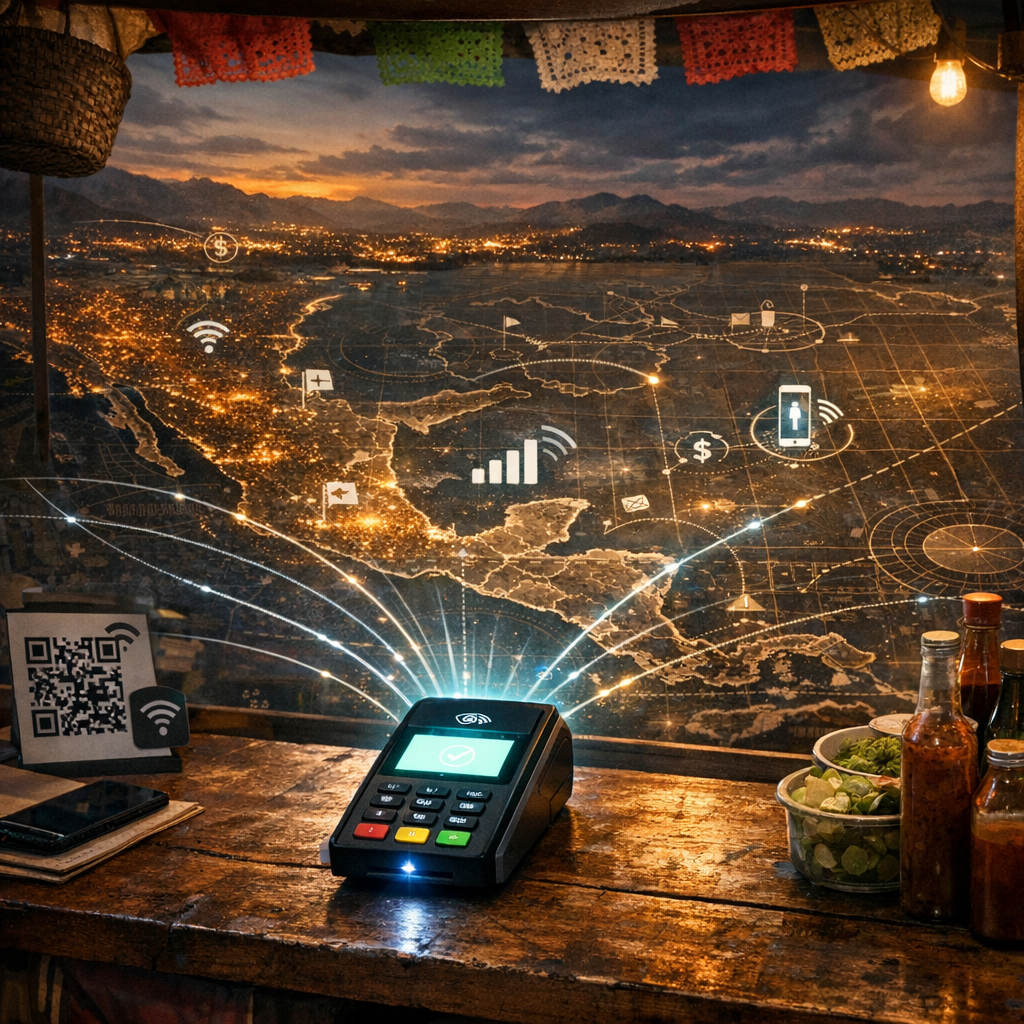
Fintech First from the Flank: Why Mexican Payments Look Less Like Silicon Valley and More Like the Battle of Puebla
A war historian’s view of Mexican fintech: not as a victory parade of exported apps, but as a hard‑fought campaign where one obscure maneuver—offline payment authorization—shows how Mexico is quietly training the shock troops of emerging‑market finance.

The text is already written in natural, idiomatic English suitable for an en‑locale audience. No localization changes are needed.
Related Articles

Crime in the Digital Age: An Anthropological Autopsy of What Was Lost Between Giants and Startups
An anthropologist walks into the crime scene of digital transformation. On the table lie banks, hospitals, retailers, fleets, and universities. They all claim to innovate. They all claim to put the user at the center. And yet, something is missing. This forensic report traces the “missing value” among incumbents and startups, sector by sector, to reconstruct the tribal code that rules today’s market.

Fintech First: How Mexican Payment Startups Are Quietly Powering Global Transactions
Mexico’s payments boom isn’t a rosy financial-inclusion story; it’s a stress lab for money. Underbanked users, unreliable connectivity, and a $60B remittance firehose are forcing founders to build rails that don’t break. This forensic teardown traces how a handful of Mexican payment startups turned local survival hacks into exportable infrastructure for the rest of the world—and what uncomfortable truths that exposes about global finance.

Letters from 2050 to the Professionals of 2030: When Giants and Startups Forgot the Customer Wasn’t a Battlefield
A radical futurist writes from 2050 to the professionals of 2030. Not to celebrate the war between giants and startups, but to warn that both sides were looking at the wrong board: the customer, time, and system resilience. An epistolary manifesto on business models, technology, and user experience from the moment disruption stopped being a slogan.