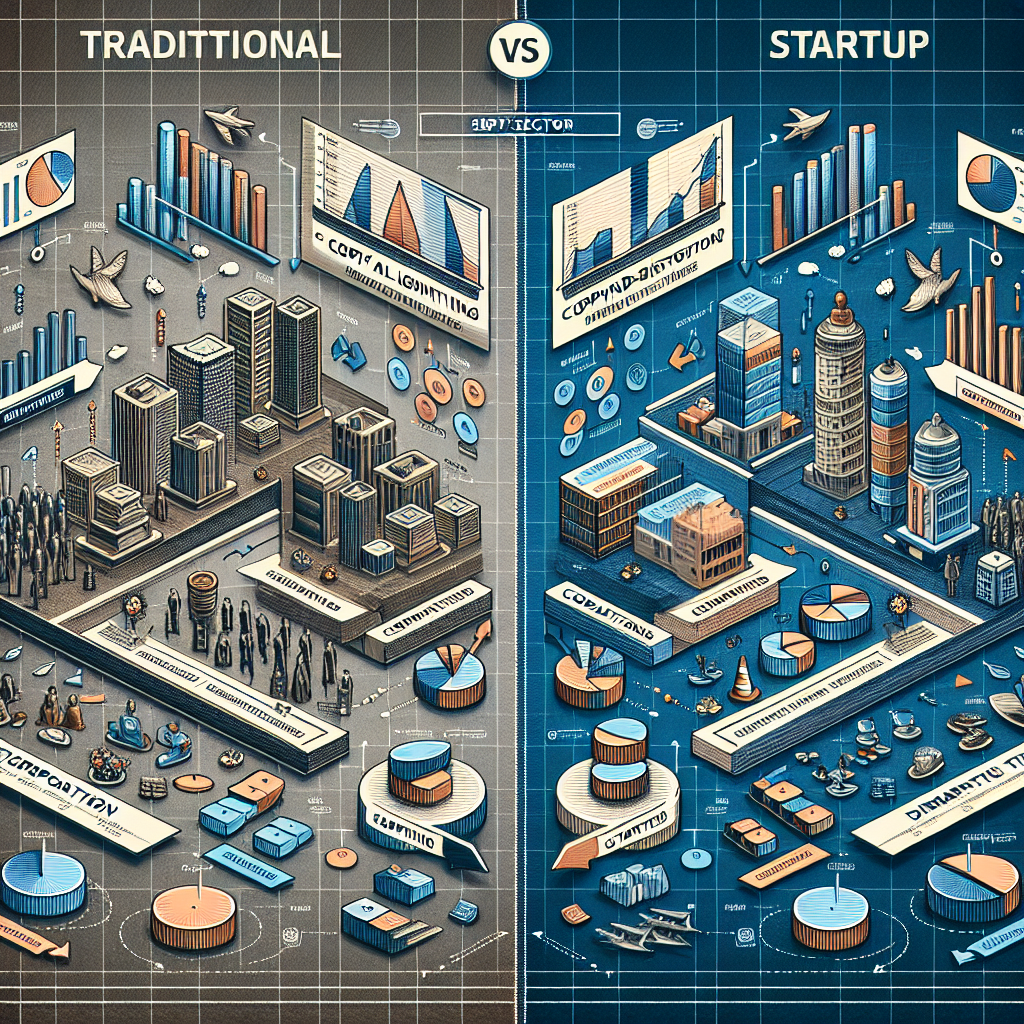
How traditional corporations copy (and distort) startup business models: a sector-by-sector comparative analysis
An in-depth analysis of how banking, retail, mobility, and healthcare are trying to emulate startups, why they often end up creating distorted versions of their models, and what executives can do to design realistic and sustainable hybrid models.

How traditional corporations copy (and distort) startup business models: a comparative sector‑by‑sector analysis
1. Introduction: from ‘digital transformation’ to ‘copy/paste’ of startup models
In less than ten years, many large companies have gone from looking at startups with condescension to feeling a mix of threat and fascination. The discourse has changed: from “digital transformation is important, but our business is different” to “why don’t we launch our Uber, our Netflix, our Revolut?”. It’s no longer just about implementing new systems, but about trying to replicate complete models born in the startup ecosystem: neobanks, D2C e‑commerce, mobility platforms, telemedicine solutions and digital wellness apps.
This shift has triggered a recurring phenomenon: the “copy/paste” of the visible model. The app, the interface, the idea of subscriptions or marketplaces, even the tone of the branding gets copied. But the foundations that make these models work in startups are left almost untouched: flexible technology platforms, a culture of experimentation, incentives aligned with growth, lean cost structures and a radical obsession with user experience. The result is usually a “corporate” version of the startup model: similar on the surface, but fundamentally different in how it creates and captures value.
This article analyzes that mismatch sector by sector. We will see how traditional banks try to look like fintechs; how brick‑and‑mortar retailers imitate D2C brands; how taxi, rent‑a‑car or public transport operators try to replicate Uber or micromobility; and how hospitals and insurers copy healthtech. At the same time, we will examine what does work in these efforts and how corporations can move from superficial imitation to more realistic hybrid models, leveraging internal capabilities, partnerships with startups and deep redesign of culture and processes[1][2][3].
2. Comparative framework: what it means to ‘copy’ a startup business model
2.1 Three layers to compare: business, technology and experience
When a corporation says “we want to do the same thing as X startup”, it usually looks at a static snapshot: an attractive app, apparently simple pricing, a smooth digital experience, an aspirational brand story. But strategically, a business model rests on three tightly connected layers: how it makes money (business model), what it uses to do so (technology and operations) and how the customer perceives it (user experience).
On the business model layer, copying means rethinking revenue sources (commissions, subscriptions, freemium, pay‑per‑use), cost structure (capex in stores or branches vs. spend on technology and digital marketing), relationship with partners (ecosystems, open banking, marketplaces) and key metrics like CAC (Customer Acquisition Cost) and LTV (Customer Lifetime Value). A profitable D2C brand can accept a high CAC because its LTV is high thanks to recurrence, upselling and community. A traditional retailer trying to imitate it without that underlying recurrence can sink its P&L in a few quarters.
The technology layer covers architecture (legacy monoliths vs. cloud‑native microservices), data usage (advanced analytics, AI, personalization), process automation and the ability to integrate with third parties via APIs. Financial startups such as Square or PayPal, for example, have been able to redefine payments because their technology allows them to launch features quickly, experiment with pricing and scale without the frictions typical of traditional banking systems[2]. Copying their “product” without their platform is, to a large extent, an illusion.
Finally, user experience is not limited to visual design. It includes onboarding, friction (or lack thereof) in key processes, personalization, tone of communication and how issues are resolved. Startups that apply methodologies such as Customer Development and Lean Startup constantly iterate on these aspects, validating hypotheses with real users and adjusting the model based on market feedback[3]. A corporation that launches a “beautiful” app but keeps internal processes identical (same forms, same approval times, same bureaucracy) is merely transferring a mediocre experience to a new channel.
2.2 The problem of copying only the visible layer
The temptation of “copy/paste” is partly due to time pressure: executives see their market moving fast and respond with visible initiatives they can communicate to the board and the market. Launching a new app, a digital brand or an “innovation lab” generates headlines, but not necessarily structural impact. What’s more: it can aggravate internal tensions by layering a new model on top of incentives, systems and culture designed for a different reality.
One of the most common mistakes is assuming it’s enough to replicate a startup’s front‑end without touching the back‑end. In banking, for example, integration layers are deployed on top of a legacy core to simulate the agility of a neobank. In retail, an online store is built on an ERP designed to supply physical stores. In healthcare, telemedicine is offered without truly integrating medical records or redesigning physicians’ and nurses’ workflows. In all cases, friction is passed on to the customer in the form of incoherent processes and unpredictable response times.
In addition, internal incentives are rarely adjusted. While the startup optimizes for growth, product validation and rapid learning—even assuming a high risk of failure that investors accept[4]—the corporation optimizes for stability, regulatory compliance, margin protection and risk reduction. This creates what we might call “schizophrenic models”: a digital project is expected to deliver startup‑like adoption and speed, but under approval processes, compliance rules and financial KPIs of a mature company. The predictable result is team frustration, cost overruns and halfway‑there user experiences.
3. Sector 1 – Traditional banking vs. fintech
3.1 From branch to mobile: two incompatible business structures
The traditional universal bank rests on a broad portfolio of products (accounts, loans, mortgages, insurance, investments) and a dense branch network. Its revenue model is based on interest margin (difference between what it pays on deposits and charges on loans) plus commissions and service fees. This diversification reduces risk and generates stability, but also implies a very heavy fixed cost structure: real estate, staff, decades‑old core systems and layer upon layer of regulation.
In contrast, neobanks and payment fintechs are born focusing on one or two customer “moments of truth”: opening an account in minutes, sending money, paying with a card abroad. Their initial revenues often come from interchange (the fee the card issuer takes on each transaction), premium fees for accounts with added perks or small associated services such as FX. Their structural cost base is lighter: with no branch network, smaller teams and third‑party tech for regulated functions, they can operate with relatively high CAC as long as they reach a sufficient user base.
The difference in CAC and LTV is crucial. A traditional bank has high LTV because it can cross‑sell products over many years, but its CAC is also high and its sales processes are heavy on human sales force. A fintech has volatile CAC, often highly dependent on digital marketing, but tries to amortize it with transaction recurrence and upselling to premium products. When a bank copies a “neobank‑like” feature without redesigning which products it offers, how it bundles them and how it captures value over time, it usually discovers that the model doesn’t add up financially.
3.2 Technology: light core vs. heavy legacy
Technologically, the comparison is even clearer. Many fintechs have been able to launch products because they build on a modern or even outsourced core (Banking‑as‑a‑Service), organized around well‑defined APIs. This allows them to clearly separate the regulated back‑end (custody of funds, compliance) from the experiential front‑end. They can iterate interfaces, test new features and adjust onboarding processes with weekly or even daily release cycles.
Traditional banks, by contrast, operate with inherited, monolithic core systems that have been patched for decades. Every change carries significant operational and regulatory risk, development times are long and maintenance windows scarce. The “typical response” has been to build intermediate layers: middleware, façade APIs, modern mobile apps that connect—often painfully—to underlying systems that were never designed for flexibility. The result is an architecture that looks little like a fintech’s, even if the customer sees similar icons on their screen.
This technological difference directly affects agility. A fintech can roll out a feature like real‑time transaction notifications or external account aggregation and deploy it globally within weeks. A bank may take months or years to integrate data from different entities, standardize it and expose it in an app that must also pass much stricter internal validation processes. Copying the “feature” is trivial; replicating the ability to change it continuously is not.
3.3 UX: extreme focus vs. feature accumulation
From a UX standpoint, the contrast is equally stark. Representative fintechs such as well‑known neobanks started with a simple claim: “open your account in minutes from your phone and track your spending in real time”. Few, extremely polished features, with special attention to onboarding (document scan, selfie, verification in minutes), price transparency and a clear, friendly tone of communication. The app is the product, and everything is organized around reducing friction to zero in those few critical flows.
Traditional banks, on the other hand, tend to cram features into their apps: payments, transfers, investment products, insurance, mortgages, admin tasks, regulatory notices, marketing campaigns… Every area of the bank wants “its space” in the app, which often becomes a mirror of the internal organization. In addition, many digital processes remain chained to physical or manual steps (in‑person signatures, calls, sending extra documentation), which creates a fragmented experience that breaks the promise of simplicity.
Where can banks genuinely learn from fintechs? In three very specific dimensions: adopting user‑centered design principles (reducing fields, removing unnecessary steps, using plain language), moving toward technological modularization that decouples products and channels, and opening up to collaboration with third parties via APIs and open banking. What is much harder to copy is the light cost structure, speed of product launch and higher tolerance for regulatory risk—elements deeply conditioned by size, oversight and social expectations around banking.
4. Sector 2 – Brick‑and‑mortar retail vs. D2C e‑commerce
4.1 Two different economic logics
Traditional brick‑and‑mortar retail operates with tight margins, high investment in stores (capex), sales staff, inventory and logistics. The model is based on buying volume from suppliers, managing assortment, negotiating terms and placing product on shelves optimally. The relationship with the customer is, in many cases, transactional and anonymous: there is deep knowledge about the product and little about the person buying it, except in advanced loyalty programs.
D2C brands are born with a different logic: they sell directly to the consumer, control the entire purchase journey—from social media ad to unboxing—and rely on different margins (with fewer intermediaries) to invest heavily in digital marketing and experience. They have full control of customer data: they can measure recurrence, churn, the effectiveness of each campaign and experiment with subscription models, bundles and limited drops that increase LTV. Acquisition cost can be high, but traceability and optimization capability make it manageable.
When a traditional retailer decides to “go D2C”, it usually creates private labels with startup‑like aesthetics, launches a specific online store or a subscription program (recurring product boxes, memberships with benefits). The problem is that this is done on top of a cost and process infrastructure designed for mass physical stores, with long buying and replenishment cycles and slower decision structures. The result: digital initiatives that fail to achieve the same closeness or personalization levels as native D2Cs.
4.2 Technology and operations: light stack vs. complex integration
D2C startups tend to build on modern, highly modular e‑commerce platforms with plug‑and‑play tools for analytics, marketing, CRM, A/B testing, recommendation engines, etc. Their supply chain may be relatively simple at the beginning: one or few products, few suppliers, outsourced warehousing and a lot of flexibility to match demand through marketing. The technological priority is to understand the customer and experiment: which creatives convert better, which email sequences reduce churn, which web changes increase average basket size.
A large retailer, in contrast, starts from inherited systems for logistics, inventory and replenishment. Its challenge is to integrate the online channel with the store network: omnichannel stock management, returns, click & collect, in‑store exchanges, etc. Any change in the e‑commerce stack has to talk to the ERP, warehouse system, historical CRM and, often, the POS system. This complex integration makes it much slower and more expensive to pivot quickly—launch new lines, test new propositions—than in a D2C.
However, a hybrid model opportunity appears here. Some retailers have learned to use their physical network as an advantage, effectively integrating click & collect, in‑store returns and loyalty programs that combine points and benefits both online and offline. When well designed, this hybridization can offer an experience that purely digital D2Cs cannot match: immediate availability, physical product trial and face‑to‑face after‑sales service, without giving up the personalization and convenience of the online channel.
4.3 UX: extreme care vs. channel fragmentation
D2C brands are masterful in experience detail. From the landing page, painstakingly crafted for conversion, to carefully designed packaging, the handwritten note or the welcome email, everything forms part of a coherent story. Customer support is agile, close, often via chat or social media with a distinctive human tone. The goal is not just to sell, but to build a community, a sense of belonging that feeds recurrence and word of mouth.
Traditional retail, for its part, tends to offer a fragmented experience. The website may have modern design but not be well synchronized with store inventory. The call center may follow generic scripts that ignore the customer’s digital history. Return policies may differ between online and offline. All this gives the user the sense of dealing with multiple companies at once, even though the logo is the same. Copying the D2Cs’ “aspirational branding” without aligning processes and service policies only generates unmet expectations.
Retail success stories show a pattern: hybrid models work when the company uses its traditional assets—scale, logistics, stores, in‑store purchase data—to power the digital channel, not the other way around. Loyalty programs based on integrated data, well‑executed click & collect, phygital experiences (such as smart fitting rooms or in‑store apps) are examples of intelligent translation of the startup model into corporate reality, rather than literal imitation.
5. Sector 3 – Traditional mobility vs. ride‑hailing and micromobility platforms
5.1 From taxi stands to algorithmic platforms
The traditional urban mobility model has relied on taxi licenses, car rental companies and, on another level, public transport. These models have inherent limitations: difficulty matching supply and demand in real time, low price transparency, fragmented booking channels (phone, stands, offices) and a user experience that varies widely by city or operator.
Ride‑hailing and micromobility platforms have introduced a radically different logic: they aggregate dispersed supply—private drivers, third‑party fleets, scooters or bikes—set dynamic prices based on demand and distance, and use matching algorithms to assign rides or vehicles almost instantly. Their business model is based on transaction commissions and, in some cases, subscriptions or packages for frequent users. The entire customer relationship is concentrated in a single integrated app for booking, payment, tracking and rating.
Traditional companies have reacted in several ways: taxis launching their own apps, consortia grouping fleets under a common brand, public transport operators developing “Mobility as a Service” (MaaS) platforms to integrate different transport modes. The common pitch is often “we have everything platform X has, but regulated and local”. Reality is usually more complex: the interface is replicated, but not always the flexibility and coordination that underpin it.
5.2 Technology: real‑time data vs. layers on manual processes
Mobility startups have built their services on real‑time data technologies: continuous vehicle geolocation, routing algorithms, ETA (estimated time of arrival) calculation, surge pricing engines to balance supply and demand, and reputation systems based on ratings. Each trip is a data source that feeds back into the models, optimizing routes, wait times and incentive allocation.
In many taxi or traditional transport initiatives, the app is essentially just a new entry door to processes that remain manual or rigid. The booking may come through the app, but allocation is still managed via radio or first‑in‑line at a stand. Prices remain fixed by regulation, with little real‑time flexibility. Data may be collected but not fully leveraged to redesign the service. Technology thus becomes a “digital coat of paint” on an operational model with no substantive changes.
Even so, some traditional players have found niches where they can compete advantageously if they adapt technology intelligently. For example, focusing on premium or corporate segments where reliability, vehicle quality and safety weigh more than rock‑bottom price; or on regulated services such as medical, school or rural transport, where regulation protects a certain business volume and technology is used to optimize routes and improve transparency rather than to maximize growth.
5.3 UX: integration vs. uncoordinated multichannel
The UX value proposition of mobility platforms is clear: a single app for the entire cycle. The user opens it, sees transport options, compares prices and times, books, knows where their vehicle is, pays automatically and leaves a review. The reputation model and trip history generate trust and reduce the need for constant comparison. Any friction becomes instant feedback feeding product improvements.
By contrast, traditional players tend to offer multiple channels: apps that only work in certain cities, mobile‑unfriendly websites, call centers with wait times, physical counters. Information is scattered, policies change depending on the channel and the user must learn to navigate a maze of options. Trying to copy a ride‑hailing app without coordinating the rest of the ecosystem produces an incoherent experience: booking may be smooth, but payment may require cash; tracking may be unavailable; complaints may be handled in another channel with no context.
Success patterns in imitation show that incumbents win when they accept they don’t need to be “the Uber of X” in a literal sense, but to offer a differentiated proposition. Public‑private partnerships to integrate digital tickets, multimodal passes and on‑demand services in low‑density areas, for example, leverage the scale and investment capacity of traditional players, combined with startup technology, to solve problems that purely private platforms don’t prioritize.
6. Sector 4 – Traditional healthcare vs. healthtech
6.1 Care models vs. patient‑centered digital services
The traditional model of clinics and hospitals is structured around in‑person care, physical infrastructure (operating rooms, beds, equipment), relationships with insurers and the logic of the medical act. Revenues are generated from procedures performed, hospital stays and complementary services, under complex regulatory frameworks that prioritize safety and clinical quality over speed of change.
Healthtech solutions, by contrast, emerge with a clear focus on accessibility, continuity and self‑management: telemedicine, chronic disease tracking apps, wellness platforms, wearables that monitor vital signs, etc. Their business model may be based on subscriptions, pay‑per‑use, agreements with insurers or even device sales. What sets them apart is their approach to the patient as an active user, with information in the palm of their hand, rather than as a passive service recipient.
Hospitals and insurers have tried to replicate these services by launching online appointment apps, teleconsultation platforms, digital wellness and prevention programs. However, internal and external adoption is often slower than expected. Regulation, health data privacy, professional liability and the inertia of clinical processes established over decades add layers of complexity that don’t appear in other sectors.
6.2 Technology: integration with medical records vs. “parallel” solutions
Technologically, healthtech startups can create simple interfaces and rational flows because they start from scratch or with narrow focus: a specific condition, a type of consultation, a patient niche. They can integrate wearable data, enable chats with professionals, medication reminders and dashboards for doctors with relative speed. The difficulty arises when they need true integration with hospital systems and existing electronic medical records.
Large healthcare institutions, in turn, depend on inherited medical record systems, highly customized and often closed. Integrating a new patient app means ensuring compatibility, strict compliance with privacy and security regulations, and redefining clinical and administrative workflows. Many corporate healthtech projects thus end up as “parallel solutions”: apps that don’t fully communicate with the care core, complex portals, duplicated information‑entry processes.
Cultural resistance is also significant. Health professionals trained in in‑person models may distrust telemedicine, seeing it as a threat to quality or an additional workload. Organizational culture matters here as much as technology: studies show that a culture geared toward innovation and flexibility correlates with higher competitive performance and greater ability to adopt new processes[5][6]. Where culture is rigid, digital solutions remain underused or become mere cosmetic add‑ons.
6.3 UX: heavy portals vs. patient‑centered apps
In UX, the gap is obvious to anyone who has used both worlds. Health startups tend to offer very focused apps: chronic disease tracking with clear charts, video calls with reminders and direct links, easy access to results and recommendations. Language is understandable, navigation simple and support often highly integrated, reducing patient anxiety.
Large healthcare organizations often offer patient portals designed more to meet administrative requirements than to make users’ lives easier. Long forms, multiple passwords and verifications, unintuitive menus and clinical jargon hinder the experience. Adding teleconsultation “on top” of this portal doesn’t solve the root problem: UX designed from the inside out rather than from the patient inwards.
Even so, interesting hybrid models are beginning to appear: insurers co‑designing digital wellness programs with startups, hospitals integrating specialized apps for specific diseases while working on gradual modernization of their medical records, and health networks using internal communities of practice—similar to the “innovation guilds” described in some studies[7]—to connect clinicians, technologists and managers. Again, success comes less from copying the healthtech du jour and more from translating its principles into a highly regulated environment.
7. Cross‑cutting patterns: what repeats across sectors
7.1 Superficial copy, deep legacy
Comparing banking, retail, mobility and healthcare, a constant pattern emerges: the corporation copies the visible layer—app, branding, apparent pricing—while keeping almost intact the processes, systems and governance structures that define how value is created. The result is a sort of “
Related Articles

Who Stole the Value? A Forensic Audit of Giants, Startups, and the Customer Left Out of the Deal
Treating today’s innovation economy as a crime scene, this essay investigates what quietly disappears when incumbents and startups reshape finance, health, retail, mobility, education, and climate tech. Beyond pitch decks and marble lobbies, who actually captures the value—and at what human cost?

The Year We Misread the Checkbox: How a Single UX Choice Rewired Giants and Startups
Writing from 2050, a radical futurist looks back on 2024 and argues that the true battle between traditional industries and startups in banking, retail, health, and mobility never took place in boardrooms or pitch decks, but inside a single, tiny UX artifact: the checkbox. By following that microscopic element, this manifesto rewrites the history of incumbents vs. startups as a struggle over who controls consent, data, and time.

The scene of the silent crime: where has courage been lost between giants and startups?
A monk‑analyst steps onto the “crime scene” of the digital economy—financial services, retail, healthcare, mobility, education, and manufacturing—to investigate a silent disappearance: the deeper value that customers, workers, and communities expected from the transformation between traditional industry and the startup ecosystem.